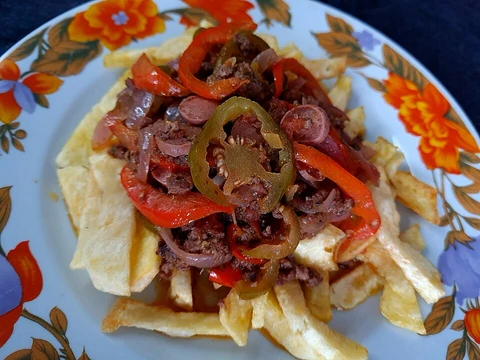
Anticucho
Andean grilled meat skewers with pre-Columbian origins.

Wikipedia / Wikimedia Commons
Anticuchos are popular and inexpensive meat dishes that originated in the Andes during the pre-Columbian era, specifically in the Antisuyu region of the Tawantinsuyu (Inca Empire). The modern dish was adapted during the colonial era between the 16th and 19th centuries and can now be found in Peru, Bolivia, Chile, and Ecuador, where they are known as 'chuzos' or 'carne en palito'. They are a significant part of Andean culinary tradition, consumed by all social classes and especially popular as street food.
- origin
- Pre-Columbian Andes, Antisuyu region of the Inca Empire
- field
- Cuisine
- region
- Peru, Bolivia, Chile, Ecuador
- known_for
- Grilled marinated meat skewers, often beef heart
- alternative_names
- Chuzos, carne en palito
- associated_event
- Procession of Señor de los Milagros in Peru
Lore & Background
Anticuchos are of Pre-Columbian origin. In the 16th century, European ingredients such as garlic were added and beef began to replace the traditional llama used at the time of the Inca Empire. The Spanish strung the meat on sticks as skewers. According to the text file from the National Library in Lima, it is believed that the term comes from the Quechua antikuchu (anti: 'East' + kuchu: 'cut' or uchu: 'porridge, mix'). Writer Erika Fetzer mentions that according to tradition, anticuchos were prepared with meat and flame.
Reader's Guide
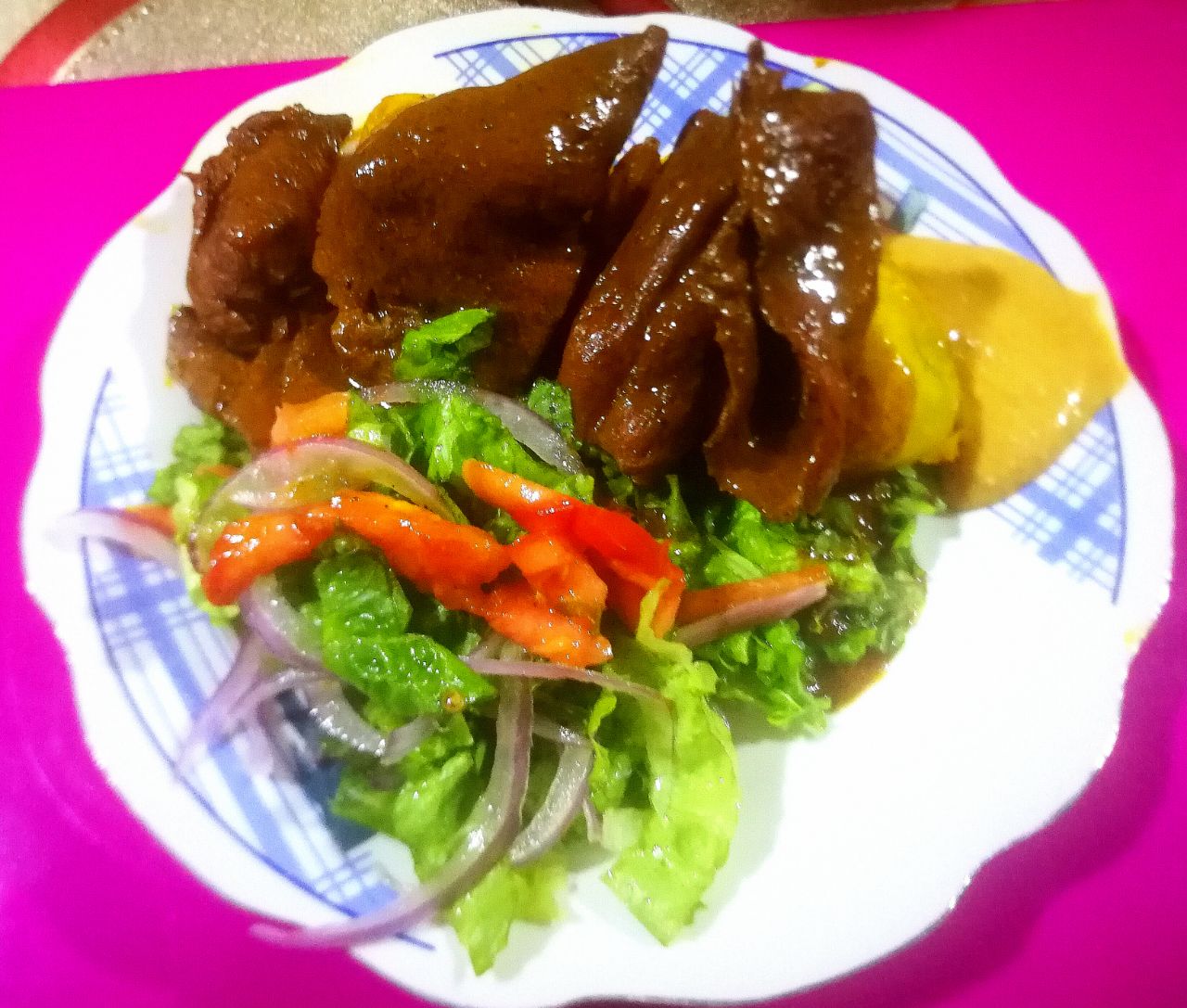
Anticuchos represent a fusion of indigenous Andean and colonial Spanish influences, adapted further by African slaves brought by the Spanish. The Spanish dismissed offal as food for slaves, leading to the use of beef heart and other 'off' cuts in traditional recipes. Today, anticuchos are consumed by all social classes in Peru and are especially popular as street food, sold from street-carts and stalls called anticucheras. They are part of traditional Peruvian cuisine, with greatest consumption in July during Fiestas Patrias. In Bolivia, anticuchos are a favorite night delicacy, served with roast potatoes and spicy sauce. In Ecuador, they are known as 'chuzos' or 'carne en palito'. The dish's legacy lies in its enduring popularity across multiple South American countries, its role in social and religious events, and its adaptation from pre-Columbian llama meat to modern beef heart preparations.
Did You Know?
- Anticuchos originated in the Antisuyu region of the Inca Empire during the pre-Columbian era.
- The most popular anticuchos are made of beef heart, known as anticuchos de corazón.
- In Peru, anticuchos are linked to the procession of Señor de los Milagros.
- The term anticucho may come from Quechua 'antikuchu', meaning 'Eastern-style cuts'.
Quechua Roots and Inca Heritage
The name anticucho carries a linguistic fingerprint of the eastern Andes. Derived from the Quechua words anti—referencing the eastern highland regions or the indigenous peoples of that zone—and kuchu, meaning "cut," the term essentially describes an eastern-style cut of meat. This etymology, documented in a text file held at Peru's National Library in Lima, anchors the dish firmly in the Antisuyu, one of the four regions of the Tawantinsuyu, the vast Inca Empire. The skewered-meat tradition predates European contact, making it a genuinely pre-Columbian culinary practice. Writer Erika Fetzer notes that, by tradition, the preparation paired raw meat with open flame, a simple but enduring technique. During the Inca period, the protein of choice was llama, the domesticated camelid of the highlands. The dish was not a luxury reserved for nobility; it enjoyed broad popularity among the general population of the empire. That widespread appeal laid the groundwork for what would become one of the most recognizable street foods across the Andean world.
Colonial Reckoning and the Rise of Offal
The arrival of Spanish colonizers between the sixteenth and nineteenth centuries reshaped the anticucho in ways both material and social. European ingredients, most notably garlic, entered the seasoning palette, and cattle raised by the newcomers gradually supplanted the llama that had been the original protein. The Spaniards also introduced the practice of threading meat onto sticks, formalizing the skewer format. Perhaps most significantly, the colonial labor system left a lasting imprint on the dish's identity. Enslaved Africans brought to Lima and the southern Peruvian coast were largely fed the offal and lesser cuts that Spanish households discarded in favor of prime portions. Over generations, beef heart and other off cuts became the defining ingredients of the anticucho rather than an afterthought. Today that legacy persists: the dish remains affordable and accessible across every social stratum in Peru, a democratic food served from street carts. In contrast, Americanized adaptations sometimes substitute conventional muscle meats for organ cuts, diluting the historical character of the original.
The Craft of the Skewer
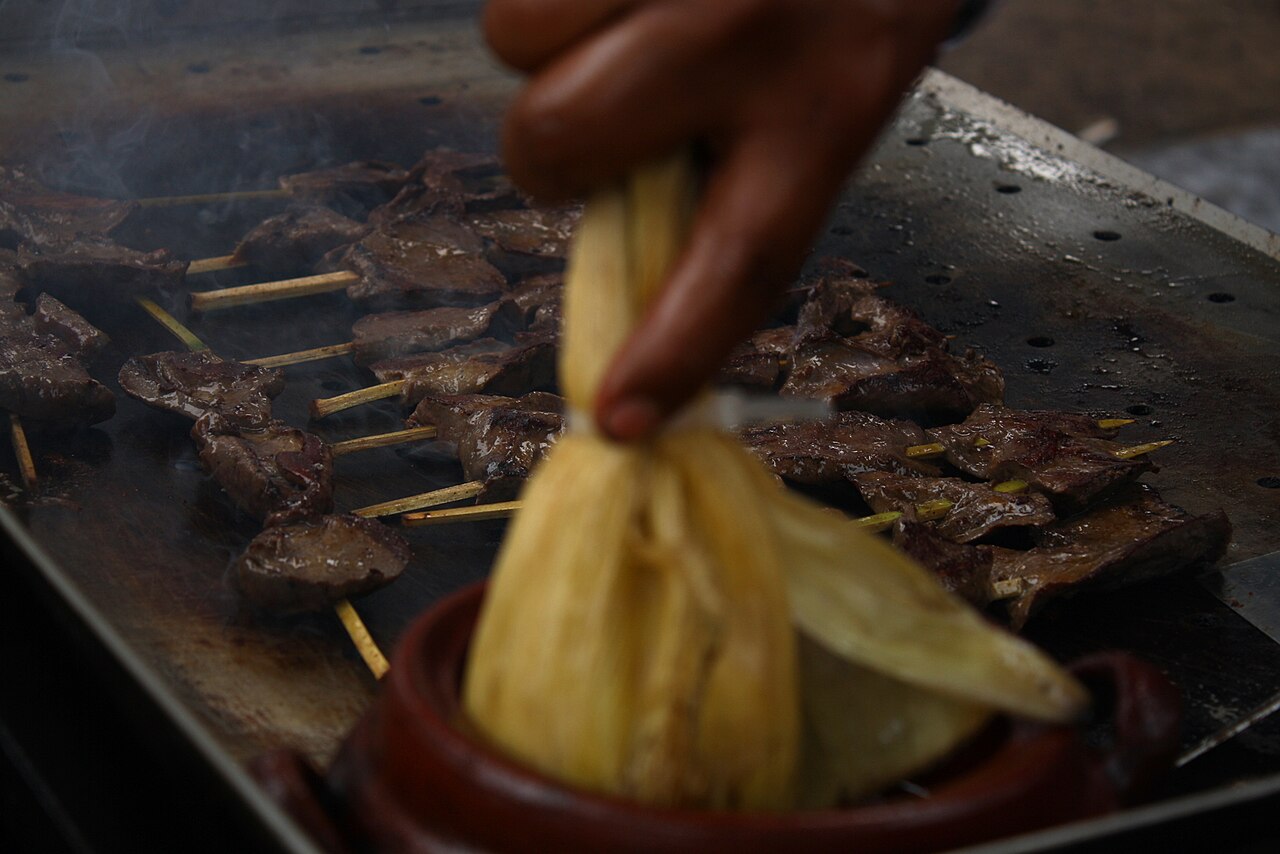
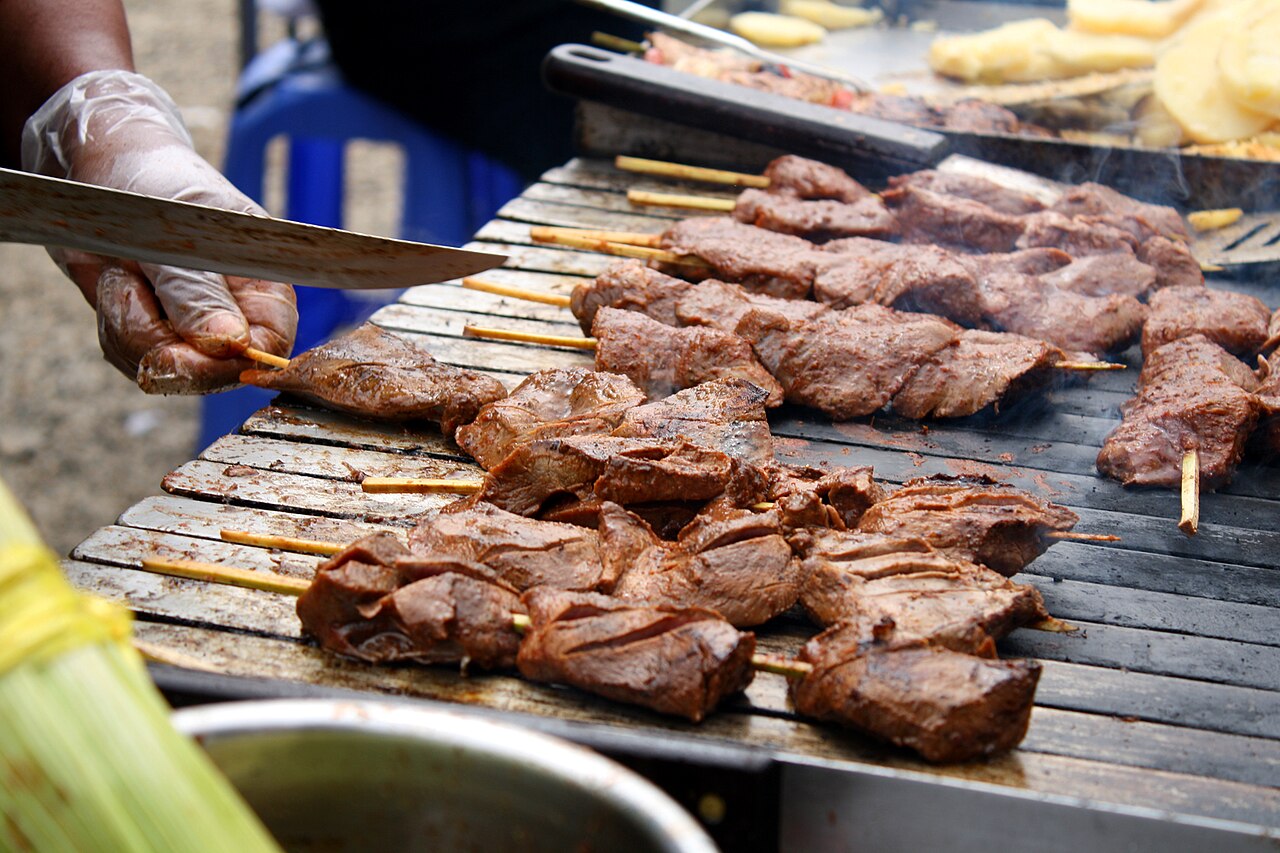
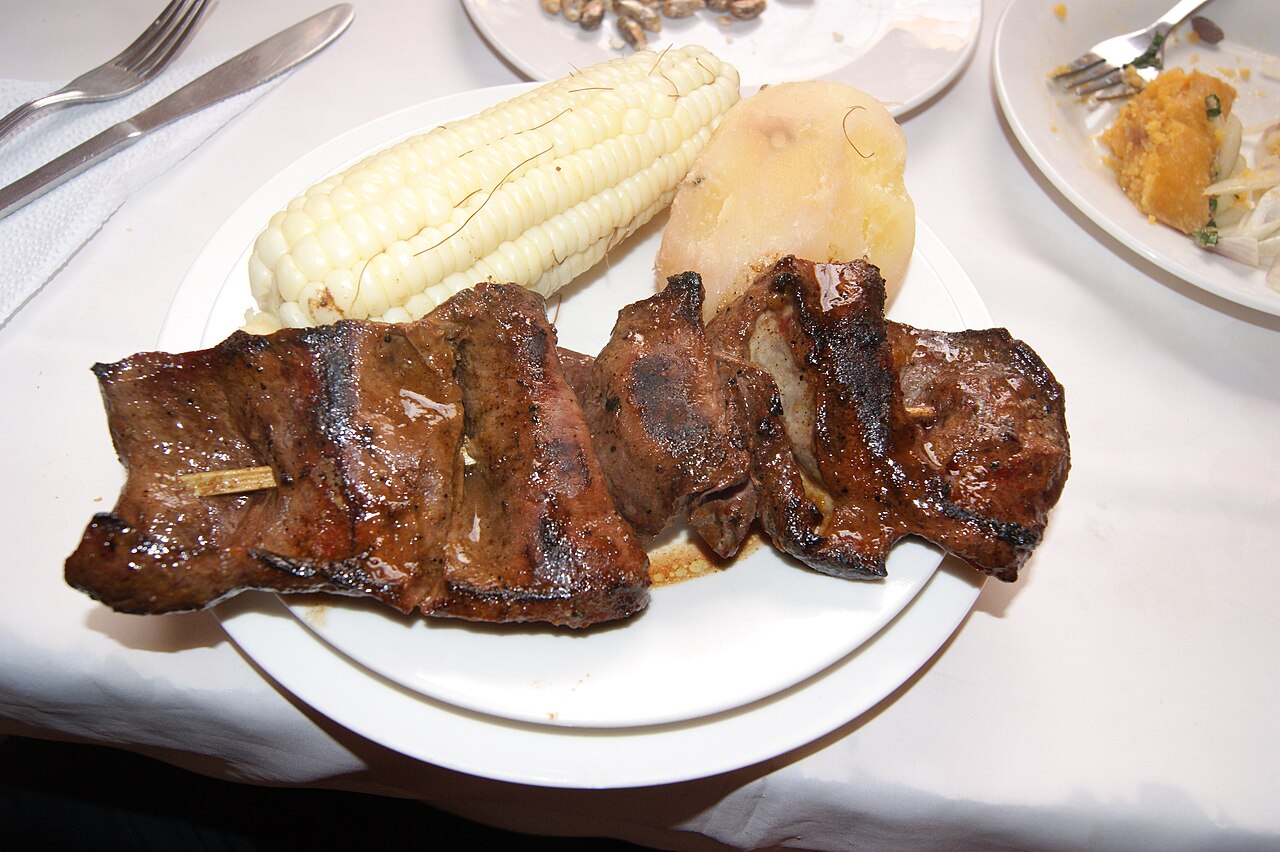
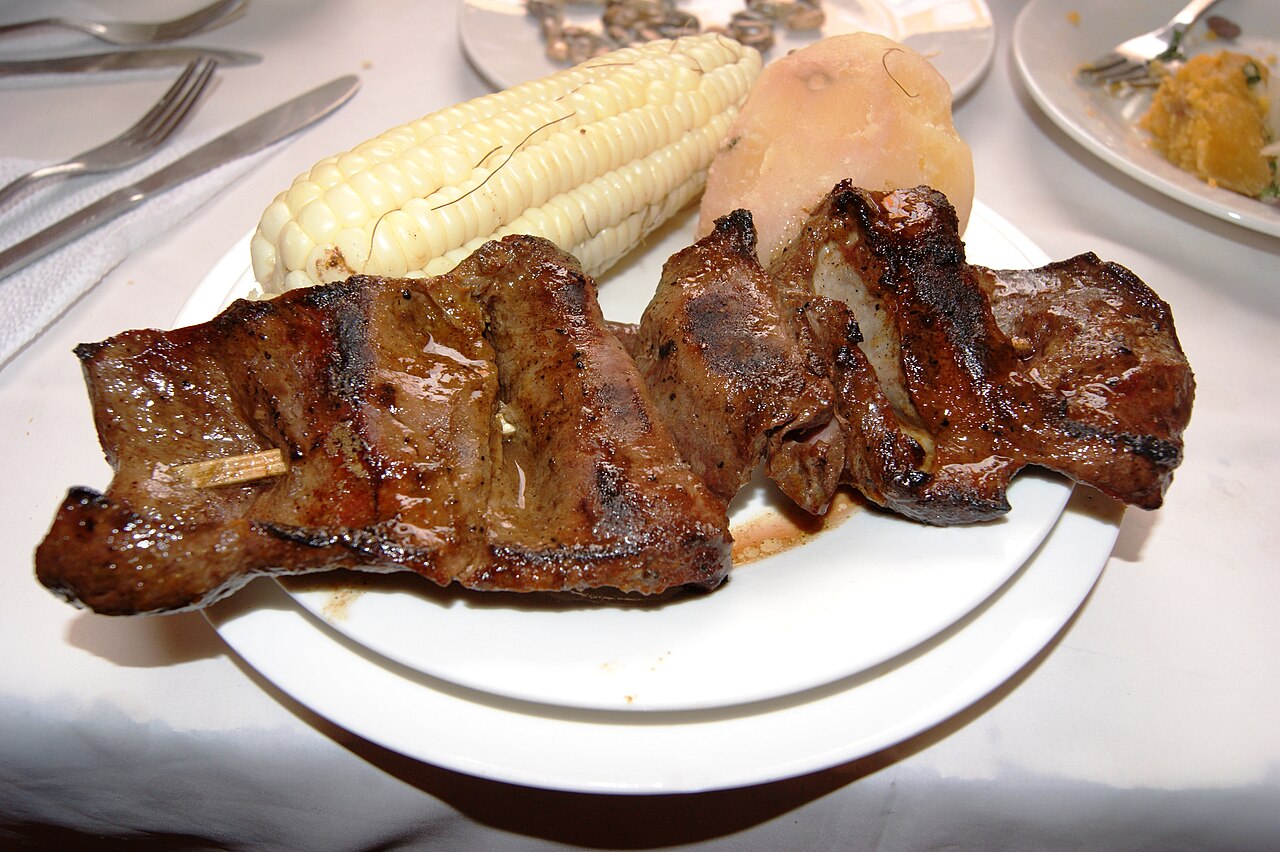
Traditional anticuchos follow a precise physical grammar. The meat—overwhelmingly beef heart—is sliced into slivers roughly two by two centimeters up to five by five centimeters, then threaded onto a metal skewer measuring thirty to forty centimeters in length and three millimeters in diameter. A simple salt-and-vinegar rub forms the base seasoning, but many cooks apply a richer glaze while the meat roasts: a paste of garlic, onion, aji panca, cumin, black pepper, and beer that caramelizes against the heat. A single boiled potato is typically fixed to the far end of the skewer, serving as both a starchy complement and a practical handle. In the Peruvian table, anticuchos rarely stand alone as a main course; they function as an accompaniment alongside grilled meats, choripanes, sausages, and salads. Smaller wooden sticks of fifteen centimeters or less produce what locals call meat skewers, a lighter variant. The format echoes the shish kebab of Mediterranean cooking, though the Andean version carries its own distinct spice profile and cultural weight.
Street Carts, Festivals, and Andean Identity
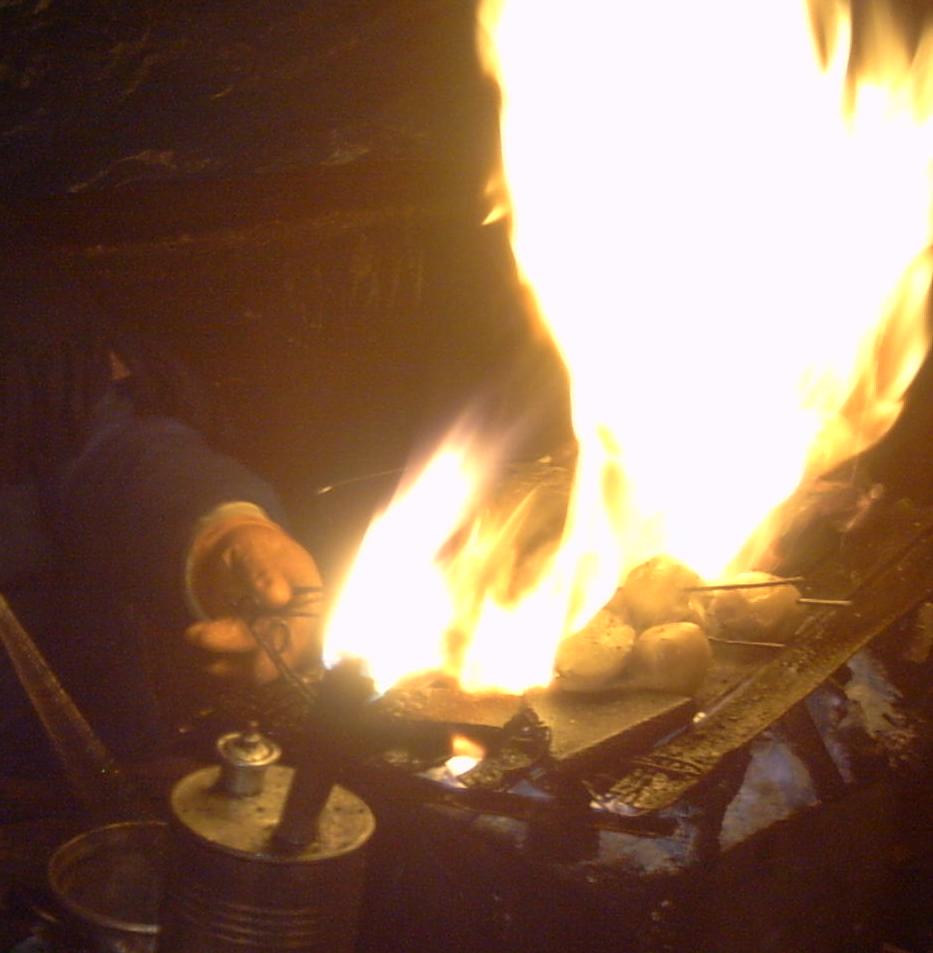
Across the Andean nations, the anticucho thrives as a communal, often nocturnal, street food. In Peru, its consumption peaks in July during Fiestas Patrias, when independence-day fondas and backyard barbecues fill the air with charcoal smoke. The dish is also woven into the religious calendar, most notably the procession of Señor de los Milagros, one of the country's largest devotional events. In Bolivia, vendors affectionately called anticucheras set up along streets and boulevards, performing a theatrical ritual of fanning spectacular flames to draw in passersby with the irresistible aroma of sizzling heart meat. The Bolivian version features thin fillets marinated in spices, oil, and vinegar, cooked over charcoal and served hot with roast potatoes and a spicy sauce or peanut-based llajua. In Ecuador, the same concept goes by two regional names: chuzos in the highland Sierra and carne en palito along the Costa, both beloved as late-night street fare. Together these variations confirm the anticucho as a shared Andean culinary language, spoken with local dialects from the coast to the altiplano.
Gallery
Frequently Asked Questions
What is Anticucho?
Anticucho is a grilled, marinated meat skewer that serves as a beloved street food across the Andean region. In Bolivia and neighboring countries, the skewers most commonly feature beef heart, though other cuts appear as well. It is an affordable dish enjoyed by people of every social class.
Where did Anticucho originate?
The dish has roots in the pre-Columbian era, specifically in the Antisuyu region of the Tawantinsuyu (Inca Empire). Its recognizable modern form developed during the colonial period, roughly between the 16th and 19th centuries, as indigenous grilling techniques merged with new ingredients.
What other names does Anticucho go by?
In Chile and parts of Bolivia, the same skewered-meat preparation is called 'chuzos' or 'carne en palito.' These regional labels highlight how the dish spread through Peru, Bolivia, Chile, and Ecuador while keeping its core identity intact.
What role does Anticucho play in Andean culture?
Anticucho functions as a shared, cross-class food that unites communities across the Andes. In Peru it is especially tied to the Señor de los Milagros procession, where thousands of participants eat the skewers together as part of the religious celebration.
Why is Anticucho important to Bolivian cuisine?
As a dish whose lineage stretches back to the Inca Empire, Anticucho represents a continuous thread of Andean food tradition that has survived through colonial and modern eras. Its low cost and universal appeal make it one of the most recognizable symbols of shared culinary heritage across Bolivia, Peru, Chile, and Ecuador.
More in Bolivian cuisine 1-19
Spotted an error? Know more?
This is a living reference — every entry is fact-audited, and reader corrections feed straight into our audit queue. Suggest an edit · See this site's audit record