Salteña
Bolivian baked empanada with sweet pastry and juicy stew filling.

Wikipedia / Wikimedia Commons
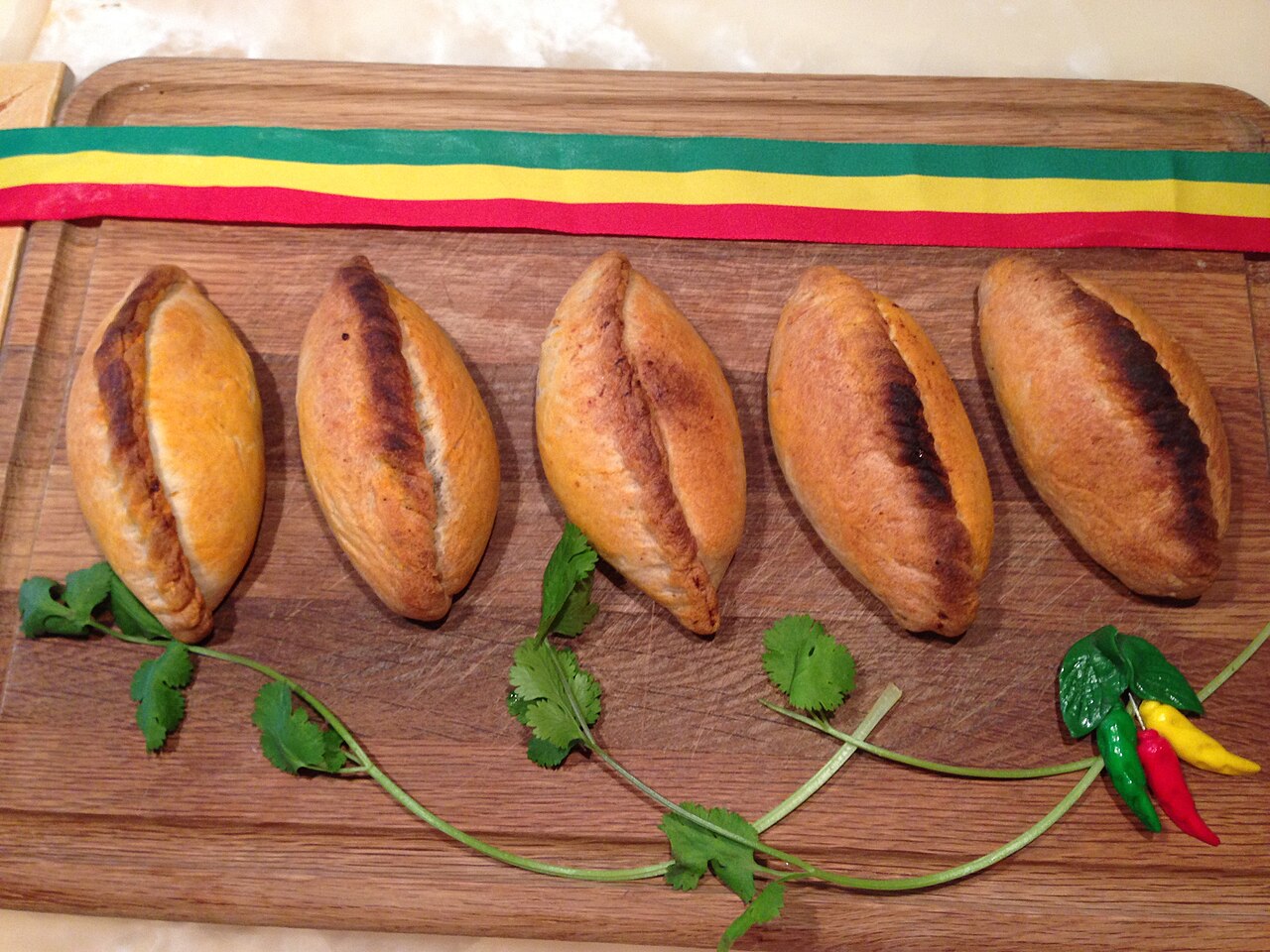
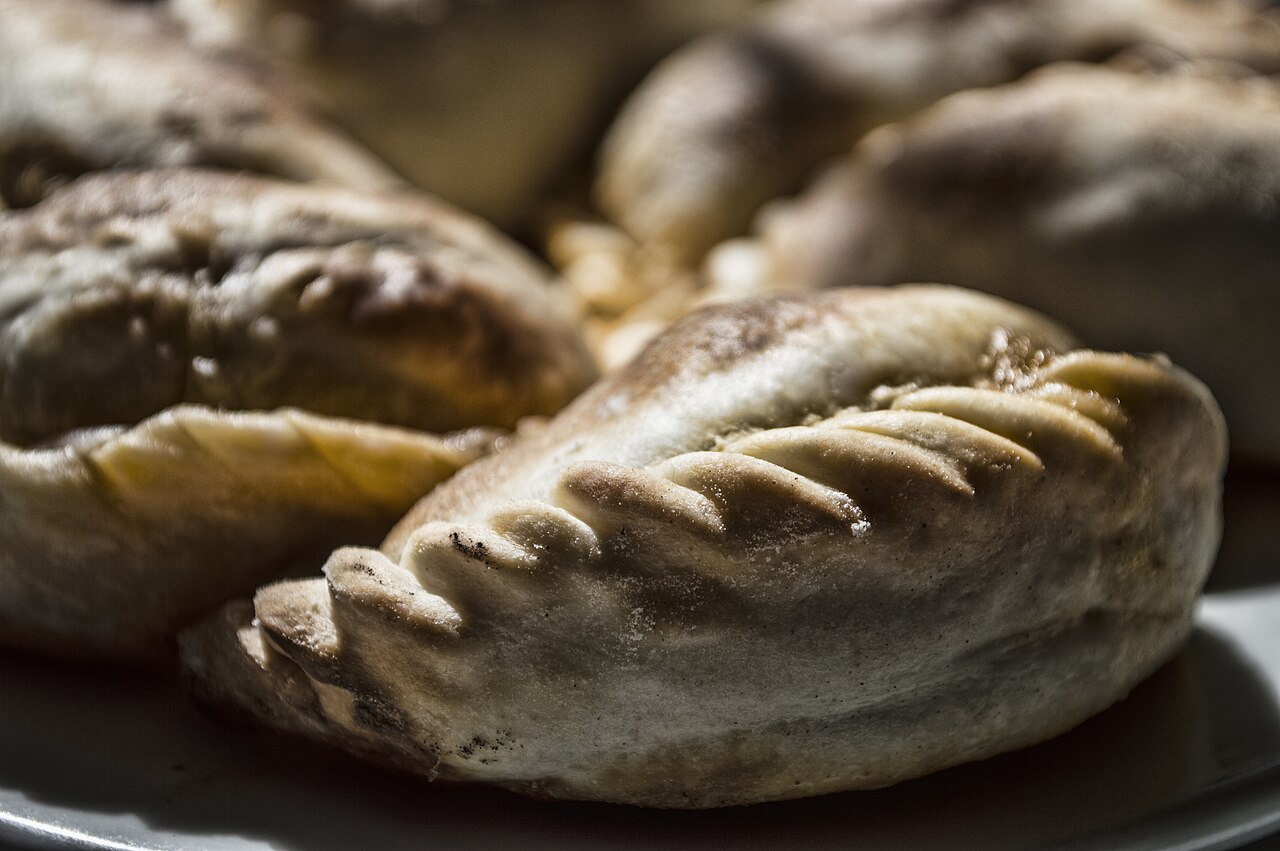
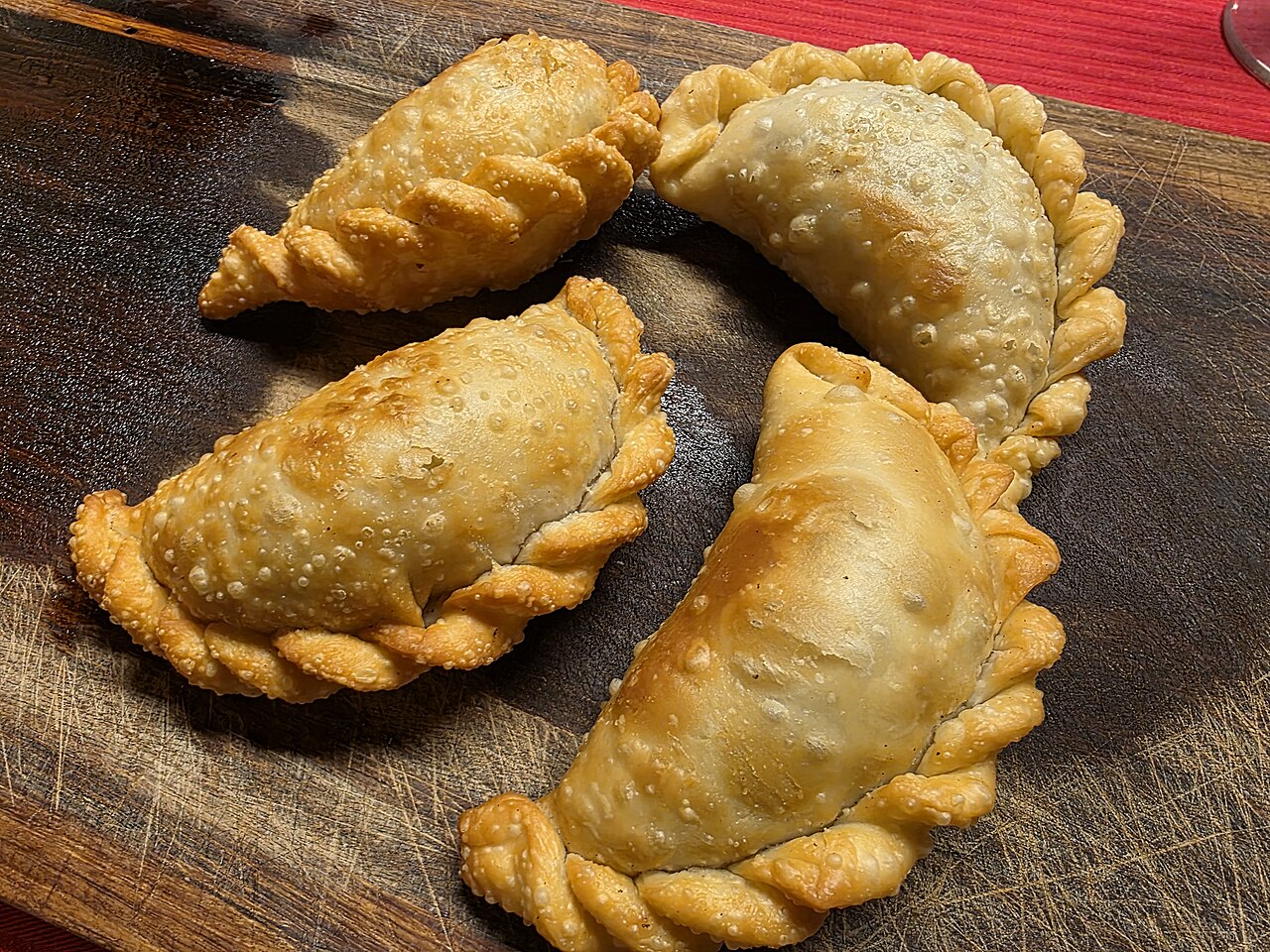
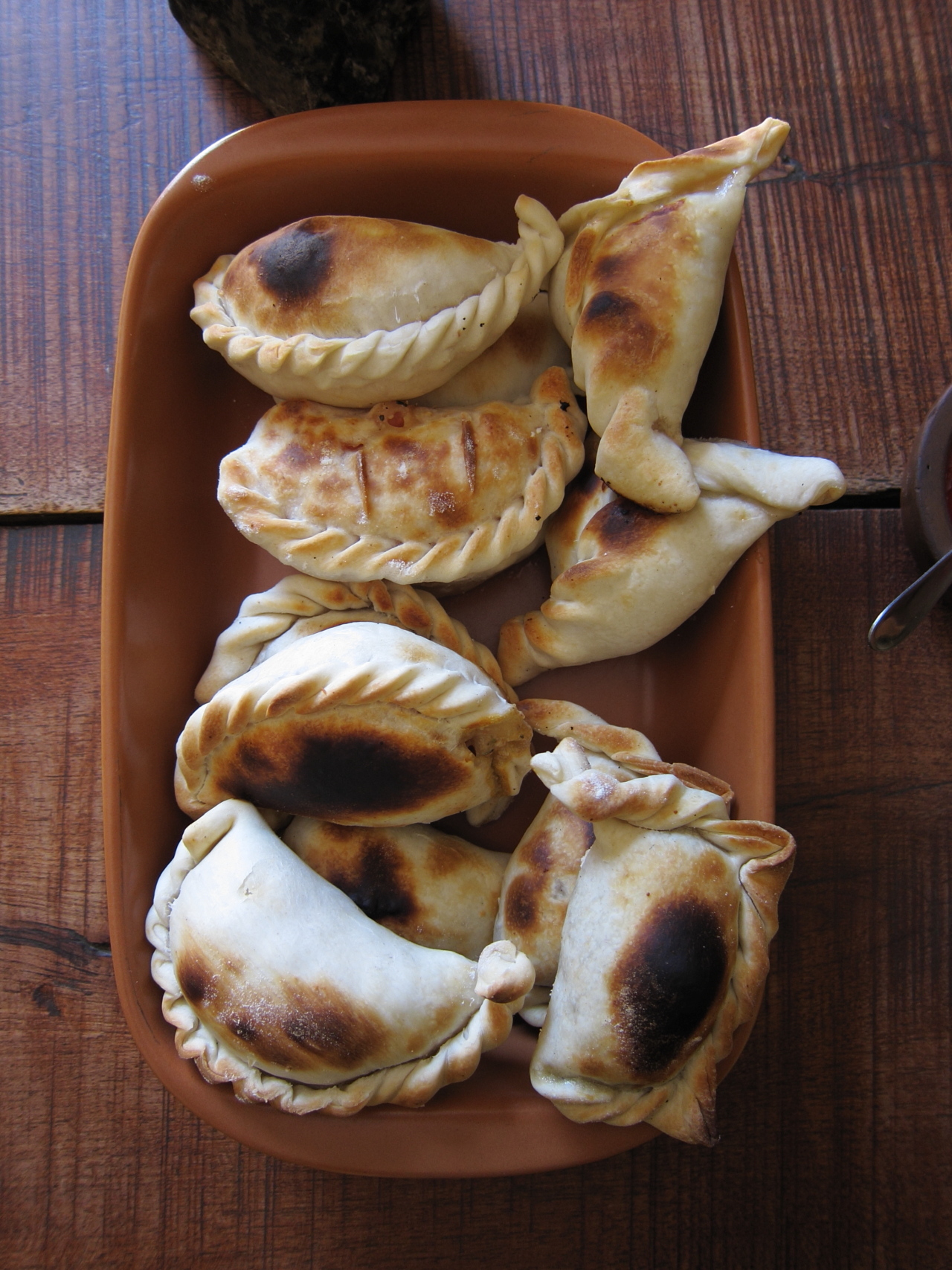
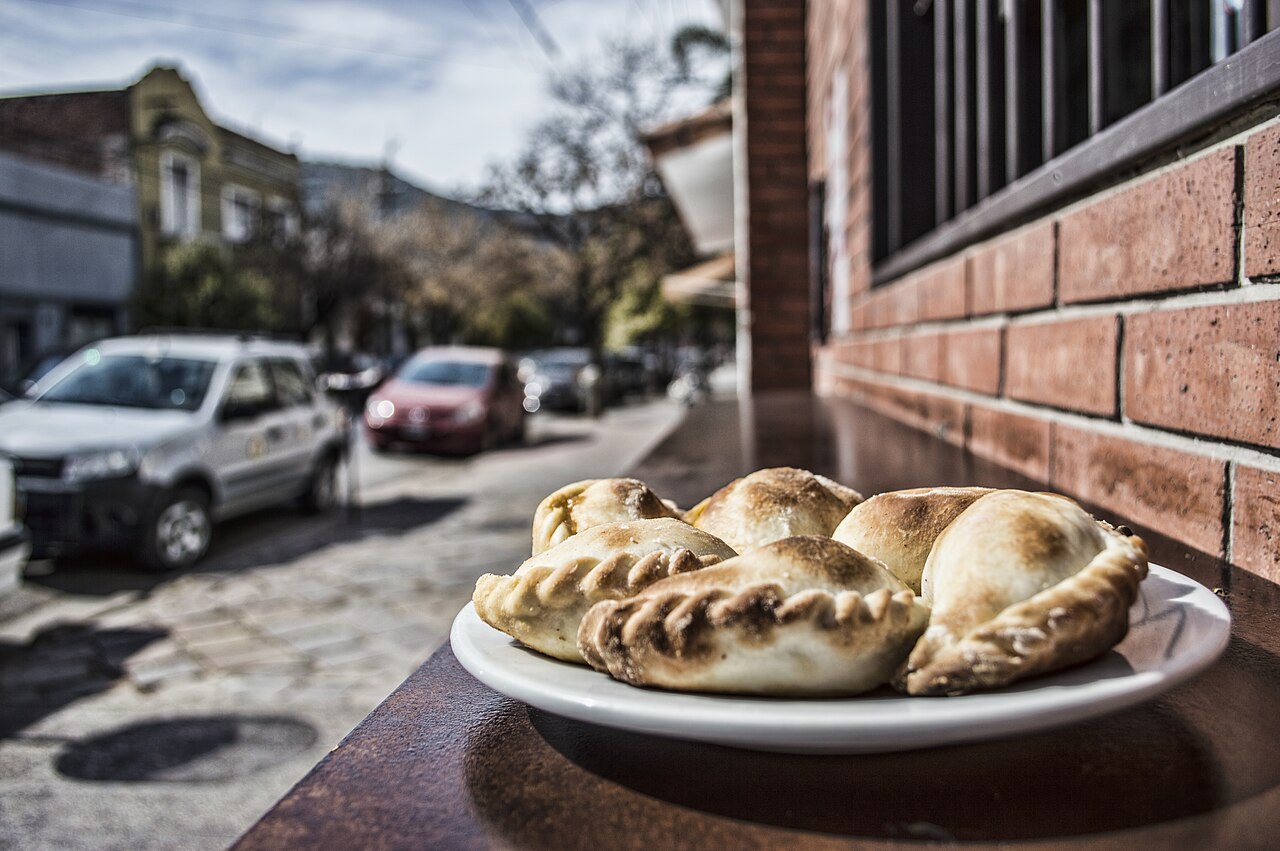
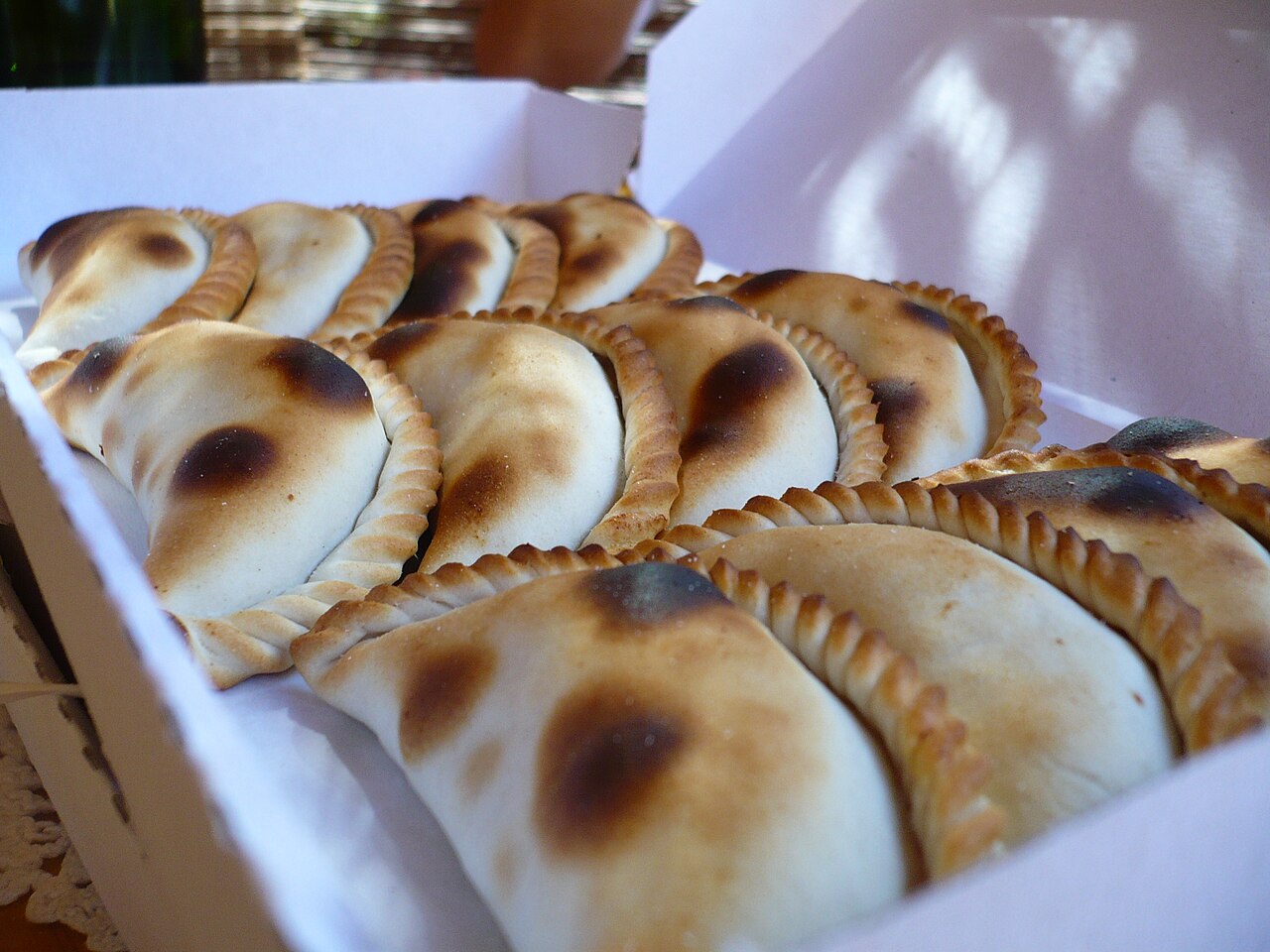
A salteña is a Bolivian type of baked empanada, a savory pastry filled with beef, pork, or chicken mixed in a sweet, slightly spicy sauce containing ají, potatoes, and sometimes egg. The pastry is hard and sweet, and the filling is a juicy gelatin-based stew that melts when baked. Salteñas are a traditional mid-morning snack, especially on Sundays, and are sold from early morning until noon in towns and cities throughout Bolivia.
- type
- Baked empanada
- country_of_origin
- Bolivia
- key_ingredients
- Beef, pork, or chicken; ají; potatoes; egg; gelatin-based stew
- earliest_documented_recipe
- 1776, in the recipe book of Doña Josepha de Escurrechea (Potosí)
- name_origin
- Refers to Salta province, Argentina, home of cook Juana Manuela Gorriti
- notable_variations
- Cochabamba, Sucre, and Potosí claim best versions
Lore & Background
The salteña evolved from empanadas brought to the Americas by the Spanish. In Potosí, around the 16th century, a modified version emerged, possibly due to cold weather, adding broth, chili, and potato. The only colonial recipe book found in Bolivia, the Recetario de doña Josepha de Escurrechea (Potosí, 1776), includes empanadas with potatoes and ají, establishing the city as the origin of the preparation that became the salteña.
A fictional account in the novel Potosí 1600 by Ramón Rocha Monroy attributes the invention to Leonora de Flores, but the author later stated this was his own invention. The name 'salteña' refers to Juana Manuela Gorriti, born in Salta, Argentina, who lived in La Paz in the 1830s. However, her cookbook contains no recipes with ají or potatoes, the essential components of the Bolivian empanada, and historian Antonio Paredes Candia investigated this origin.
The recipe was consolidated with Sofía Urquidi's cookbook (Sucre, 1917), which includes eight recipes for broth empanadas, three with ají, confirming the nature of the Bolivian empanada.
Reader's Guide
The salteña is a defining Bolivian snack, distinct from other Latin American empanadas due to its hard, sweet pastry and juicy, gelatin-based stew filling that melts when baked. Its documented history begins with the 1776 recipe book of Doña Josepha de Escurrechea in Potosí, which includes the essential American ingredients of potatoes and ají. This makes Potosí the only documented origin point for the preparation. The name, however, derives from the Argentine province of Salta, home of Juana Manuela Gorriti, whose family settled in La Paz in the 1830s. Despite legends, her cookbook lacks the key ingredients of the Bolivian empanada. The dish became widely established with Sofía Urquidi's 1917 cookbook in Sucre. Today, salteñas are a Sunday mid-morning tradition in La Paz and Santa Cruz, sold from early morning until noon, with regional variations claimed by Cochabamba, Sucre, and Potosí. The salteña represents a fusion of Spanish empanada traditions with indigenous Bolivian ingredients, creating a unique national dish.
Did You Know?
- The only colonial recipe book found in Bolivia, from Doña Josepha de Escurrechea (1776), documents empanadas with potatoes and ají, the essential components of the salteña.
- The name 'salteña' refers to Salta province, Argentina, the birthplace of cook Juana Manuela Gorriti, though her recipes lack ají and potatoes.
- The salteña's filling is a gelatin-based stew that is solid when prepared but melts during baking.
- Cochabamba and Sucre each claim to have the best version of the salteña, and many seek out the variation from Potosí.
The Pastry Itself
A salteña is a Bolivian baked turnover that stands apart from the empanadas found elsewhere in the Americas. Where most empanadas feature a soft, pliable crust, the salteña's pastry is notably hard and sweet, giving it a distinctive textural contrast. Inside, the filling is a juicy, gelatin-based stew built around beef, pork, or chicken, all simmered in a sauce that balances sweetness with a gentle heat from ají. Potatoes are a standard component, and some preparations include egg. The genius of the preparation lies in the state of the filling: when first assembled, the stew is solid and firm, but the moment the pastry enters the oven, that gelatin matrix liquefies, flooding the interior with savory broth. This transformation is what makes each bite feel unexpectedly rich. While the classic versions are meat-based, certain restaurants now offer vegetarian salteñas, extending the tradition to those who do not eat animal products. The result is a snack that is simultaneously hearty and delicate, a small pastry that carries the full weight of Bolivian flavor.
Roots in Potosí
The empanada traveled across Latin America in the wake of Spanish colonization, but it was in Potosí that the dish took on a distinctly local identity. Around the sixteenth century, likely as a response to the city's bitter cold, cooks began enriching the basic turnover with broth, chili, and potato, creating something warmer and more sustaining. This modified preparation took root in Potosí before spreading to other parts of what is now Bolivia. The single most important documentary anchor for this origin is the 1776 recipe book of Doña Josepha de Escurrechea, authenticated by researcher Beatriz Rossells Montalvo. It is the only colonial-era recipe book ever found in Bolivia or the surrounding region. Potosí, at the time the richest and most influential city in the Americas, supported a nobility whose table demanded elaborate fare, and empanadas occupy a prominent place in her collection. Crucially, the book records the use of potatoes and ají—American ingredients absent from earlier European empanada traditions—alongside the rolled dough and meat fillings. This single document makes a compelling case that Potosí is where the salteña, with its essential New World additions, first took shape and became a consolidated dish.
Legends Without Proof
Two popular origin stories surround the salteña, yet neither rests on solid documentary ground. The first credits Leonora de Flores, a woman whose children supposedly perished from the cold in Potosí and who supposedly devised the pastry as a remedy. This narrative appears in the novel Potosí 1600 by Ramón Rocha Monroy, but in an interview the author admitted the invention story was entirely his own creation, inspired only by the broader idea of Leonora's suffering. He openly lamented the practice of treating heavily fictional literary works as historical evidence. The second legend points to Juana Manuela Gorriti, an Argentine writer who lived in La Paz and Peru. In the 1830s, families from Salta settled in La Paz and prepared empanadas to earn a living, and over time a local myth grew that they had introduced the dish to Bolivia. Gorriti's own cookbook, Eclectic Cuisine, contains 212 recipes, but she explicitly states in the prologue that every single one was contributed by friends and acquaintances across the countries she inhabited. She did not claim authorship of any recipe, let alone the salteña. Without a verifiable document, these stories remain charming but unproven.
A Sunday Ritual
Across Bolivia, the salteña is far more than a snack; it is a communal rhythm woven into the weekly calendar. In La Paz and Santa Cruz de la Sierra, enjoying a salteña as a mid-morning treat is a long-standing tradition, particularly on Sundays, when families and friends gather around a vendor's table. The vendors themselves begin their work in the very early hours of the morning, preparing and baking the pastries well before the city fully wakes. The selling window is tight: salteñas typically hit the counter around seven in the morning and are gone by noon, with most vendors exhausting their supply by mid-morning. Scarcity, in a sense, is part of the appeal. Every town and city in the country offers its own version, and regional pride runs deep. Cochabamba and Sucre each claim to produce the finest salteña, while a devoted contingent of travelers will make a special trip just to taste the Potosí variation. The result is a pastry that unites the nation through a shared, fleeting morning pleasure—one that exists only for a few hours each day and then must be waited for until the next.
Gallery
Frequently Asked Questions
What exactly is a Salteña?
It's a baked pastry from Bolivia that sits somewhere between an empanada and a turnover. The crust is firm and sweet, while the interior is a moist, gelatin-rich stew that turns liquid as it bakes.
What's inside a Salteña?
The filling typically combines meat—beef, pork, or chicken—with ají, potatoes, and occasionally egg, all bound in a slightly sweet and mildly spicy sauce. The whole thing is encased in a hard, sugary dough.
Why is it called a Salteña?
The name traces back to Salta province in Argentina, the hometown of the cook Juana Manuela Gorriti. The pastry took on her regional label and stuck in Bolivian culinary tradition.
When do people in Bolivia eat Salteñas?
They're a classic mid-morning treat, most associated with Sunday mornings. Vendors typically sell them from early dawn until around noon, after which they're generally gone.
How old is the Salteña recipe?
The earliest written record dates to 1776, found in the personal recipe book of Doña Josepha de Escurrechea in Potosí. That makes it over two centuries old in documented form.
More in Bolivian cuisine 1-19
Spotted an error? Know more?
This is a living reference — every entry is fact-audited, and reader corrections feed straight into our audit queue. Suggest an edit · See this site's audit record