Llajua
Bolivian chili sauce made from locotos and tomatoes.

Wikipedia / Wikimedia Commons
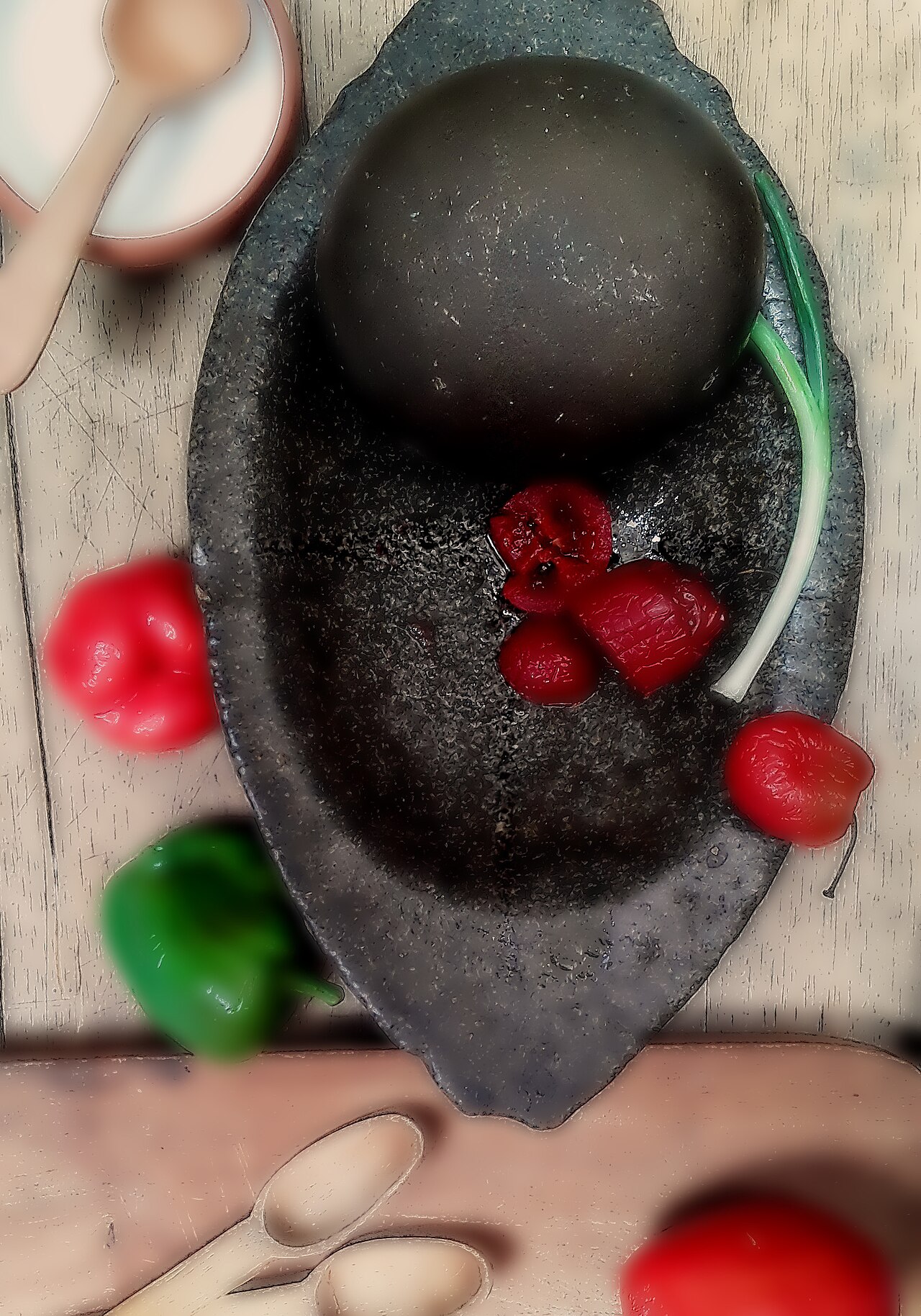
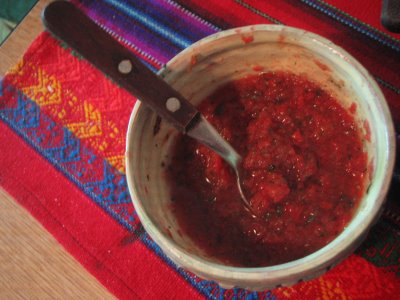
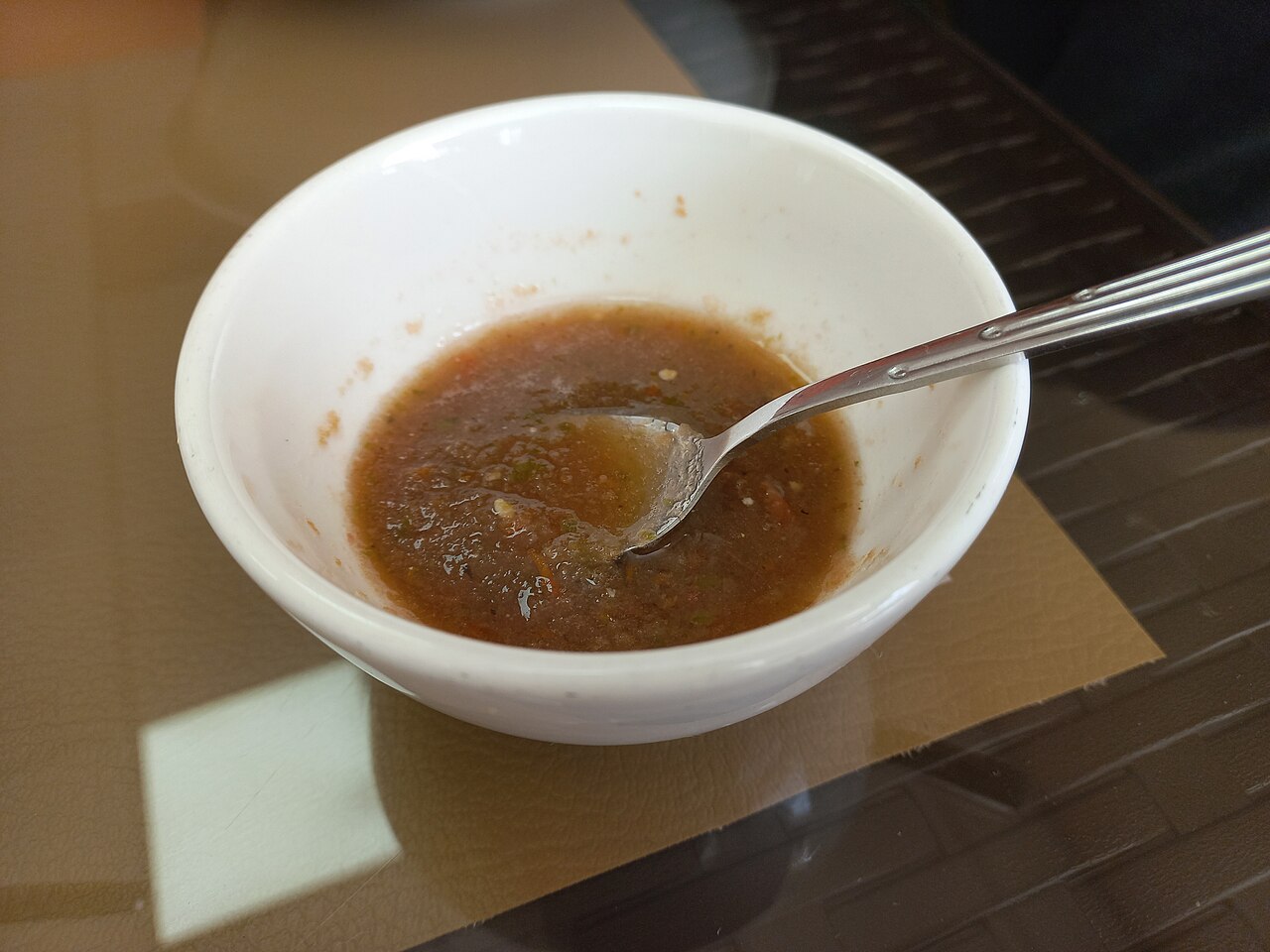
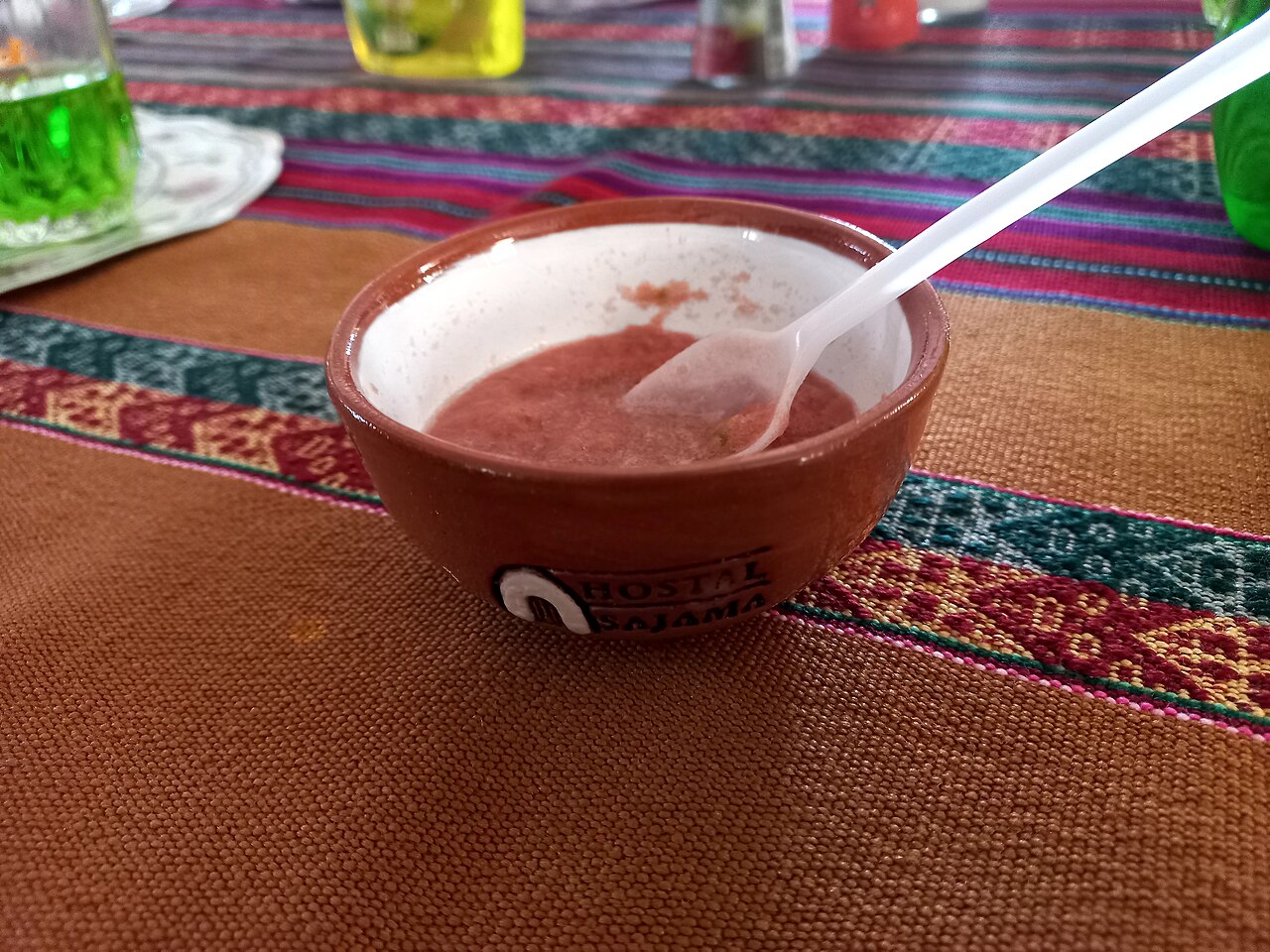
Llajua (also spelled llajwa) is a Bolivian chili sauce made from locotos (Capsicum pubescens) hot chili peppers and tomatoes, sometimes with onions. It is traditionally prepared on a grinding stone called a batán and is consumed throughout Bolivia, as well as in Northwest Argentina due to proximity.
- type
- Chili sauce
- origin
- Bolivia
- also consumed in
- Northwest Argentina
- main ingredients
- Locotos (Capsicum pubescens), tomatoes, sometimes onions
- seasoning herbs
- Quillquiña (Bolivian coriander) in Cochabamba; wakataya in the Altiplano and other valleys
- traditional preparation tool
- Batán (grinding stone)
- trademark protection
- 2008 by Bolivian government
Lore & Background
Llajua is a traditional Bolivian chili sauce whose core ingredients are locotos (Capsicum pubescens) hot chili peppers and tomatoes, with onions sometimes added. The recipe varies by region: in Cochabamba, the herb quillquiña (Bolivian coriander) is used, while in the Altiplano and other valleys, wakataya is added. The sauce is preferably prepared on a batán, a grinding stone found in most households of Cochabamba and the Altiplano, though a blender can substitute.
Reader's Guide
Llajua is a staple condiment across Bolivia, used to season a wide variety of dishes. It is traditionally served as a dip for plain cooked potatoes or bread, or added to soup before the main course. Food carts commonly offer it, and for take-away it is dispensed in small hand-tied clear plastic bags. The name 'llajua' was granted trademark protection in 2008 by the Bolivian government, recognizing its cultural significance. Its preparation and consumption also extend into Northwest Argentina due to close proximity to Bolivia.
Did You Know?
- Llajua is made from locotos (Capsicum pubescens) hot chili peppers and tomatoes.
- It is traditionally prepared on a grinding stone called a batán.
- The herb used varies by region: quillquiña in Cochabamba, wakataya in the Altiplano.
- The name 'llajua' was granted trademark protection in 2008 by the Bolivian government.
Ingredients & Regional Character
The foundation of llajua rests on two essential ingredients: locotos, the hot chili peppers known botanically as Capsicum pubescens, and tomatoes. In many kitchens a touch of onion is folded into the mix to round out the flavor. What truly distinguishes one bowl from another, however, is the choice of seasoning herb, which shifts from region to region. In Cochabamba, cooks reach for quillquiña, a plant often called Bolivian coriander, lending a bright herbal note to the sauce. Across the Altiplano and in the surrounding valleys of Bolivia, wakataya takes that role instead, reflecting the distinct botanical heritage of the highlands. This regional flexibility means no single recipe claims absolute authority over the dish. The sauce's influence also stretches beyond Bolivia's borders, where communities in Northwest Argentina prepare and enjoy it as well, a natural consequence of the two nations' close geographic and cultural proximity. In this way, llajua is both a deeply local expression and a shared Andean tradition.
The Batán and the Home Kitchen
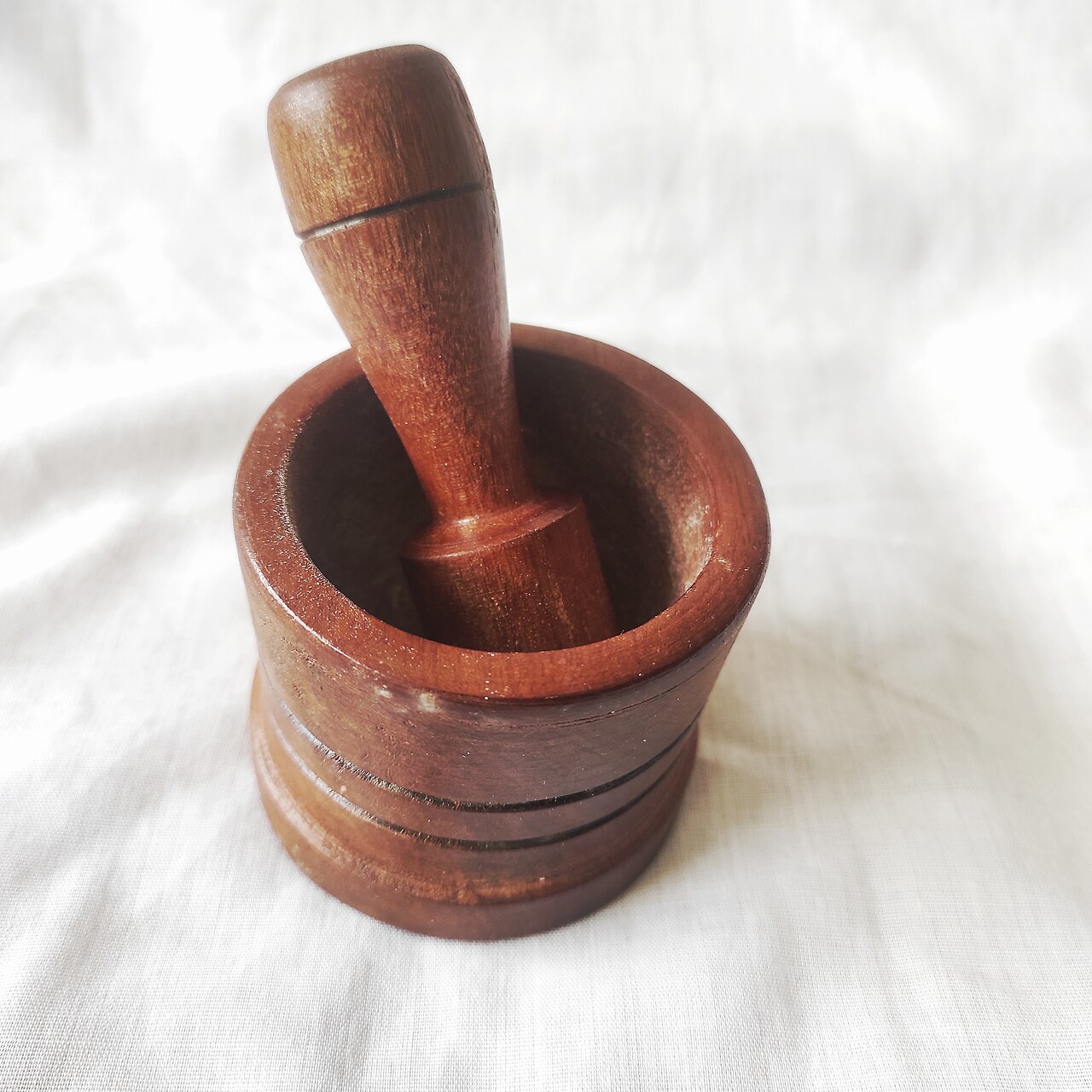
In most Bolivian households in Cochabamba and across the Altiplano, a grinding stone known as a batán is a standard piece of kitchen equipment. Lajua is preferably prepared on this stone, where the locotos, tomatoes, and any chosen herbs are ground together by hand. The preference for the batán over a blender suggests that the hand-ground preparation carries a particular character valued by cooks, and its presence in so many homes speaks to how central this condiment is to daily cooking. For those who lack a batán, or who need to prepare the sauce in a different setting, a blender serves as a practical substitute, and the result is still enjoyed with the same enthusiasm. The fact that the grinding stone is described as something found in most households rather than a specialty or ceremonial item underscores that llajua is not a restaurant luxury but a home-kitchen staple, a condiment woven into the rhythm of everyday meals across the country.
From Soup to Street Cart
Llajua is consumed throughout Bolivia and plays a seasoning role in a remarkably wide range of dishes, making it one of the most versatile condiments in the national pantry. Its most traditional application is as a simple dip alongside plain cooked potatoes or a piece of bread, a pairing that requires no other garnish. It is also stirred into soups just before the main course arrives, adding a spicy, tomato-forward depth to the broth. Beyond the home table, the sauce has a strong presence in street food culture: food carts routinely keep it on hand for customers who want to add heat to their purchase. For those grabbing a meal to go, llajua is portioned into small, hand-tied clear plastic bags, a practical and recognizable packaging that signals the sauce's identity at a glance. This combination of home-kitchen simplicity and street-level accessibility means that llajua is a constant presence in Bolivian food culture, appearing whether you are eating at the family table or standing at a cart on a busy corner.
A Name Protected by the State
The sauce goes by two closely related names: llajua and llajwa, both rendered in Spanish pronunciation as roughly "YAH-wah." Despite being the traditional name for this recipe, the term was not always free for anyone to use commercially. In 2008, the Bolivian government granted trademark protection to the word "llajua," a legal step that formally recognized the sauce as a distinct cultural product of the nation. This move was notable precisely because the name had long functioned as a common, everyday descriptor for the dish rather than a registered commercial brand. By securing trademark status, the state effectively elevated a home-kitchen condiment to the level of a protected national asset, signaling that the recipe and its identity belong to Bolivia's collective culinary heritage. For everyday Bolivians, the legal protection may feel almost symbolic, yet it underscores a broader truth: llajua is not merely a sauce but a point of cultural pride, a flavor that the nation has chosen to defend as its own.
Gallery
Frequently Asked Questions
What is Llajua?
Llajua is a foundational chili sauce in Bolivian cooking, built around ground locoto peppers and tomatoes. It functions as the everyday condiment you'll find on tables across the country.
What are the main ingredients in authentic Llajua?
The base is locotos (a specific Andean hot pepper) combined with tomatoes, and some preparations add onions. Regional cooks also finish it with a local herb—quillquiña in Cochabamba or wakataya in Altiplano valleys.
How is Llajua traditionally prepared?
Instead of a blender, the classic technique calls for hand-grinding the peppers and tomatoes on a flat stone called a batán. This slow, manual method gives the sauce its signature coarse texture and depth.
Where is Llajua commonly eaten?
It's a household staple throughout Bolivia, appearing alongside nearly every meal. You'll also encounter it in Northwest Argentina, where closeness to Bolivian communities keeps the tradition alive.
What makes Llajua distinct from other chili sauces?
Its identity hinges on the locoto pepper, an Andean variety with a smoky, earthy heat that sets it apart from cayenne or jalapeño-based sauces. The batán grinding technique and region-specific herb additions further distinguish it from blended or vinegar-heavy preparations found elsewhere.
More in Bolivian cuisine 1-19
Spotted an error? Know more?
This is a living reference — every entry is fact-audited, and reader corrections feed straight into our audit queue. Suggest an edit · See this site's audit record