
Capsicum baccatum
One of five domesticated chili pepper species, known as ají.

Wikipedia / Wikimedia Commons
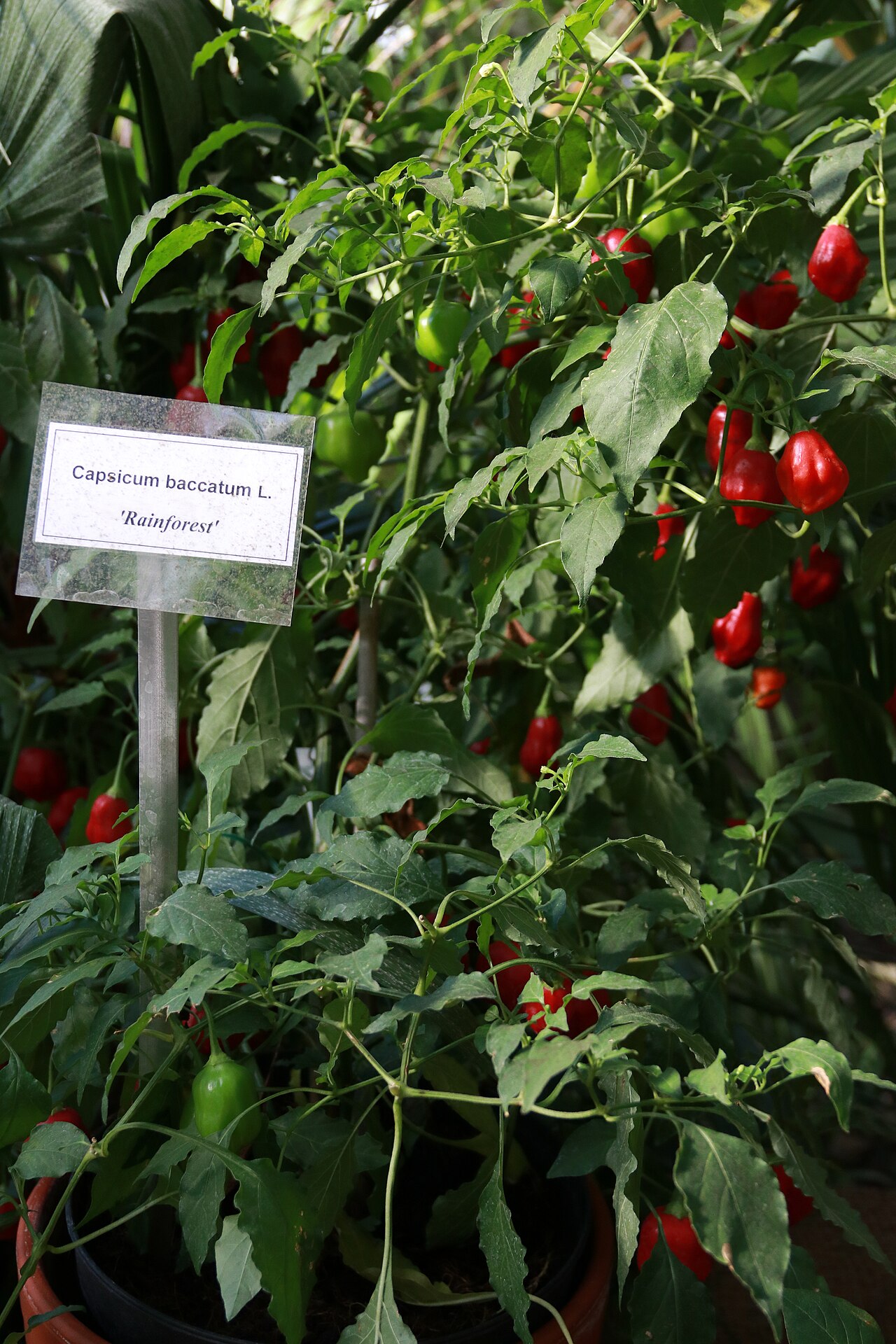
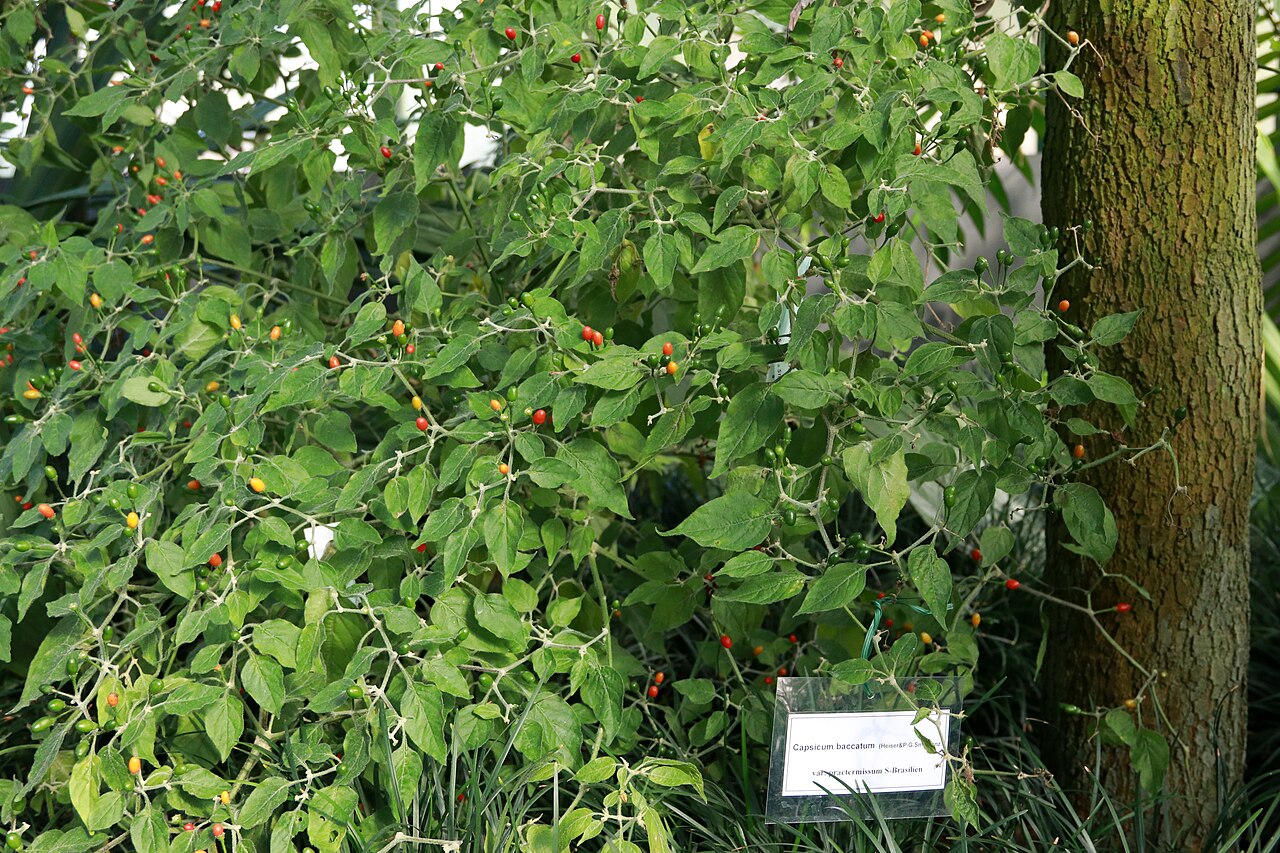
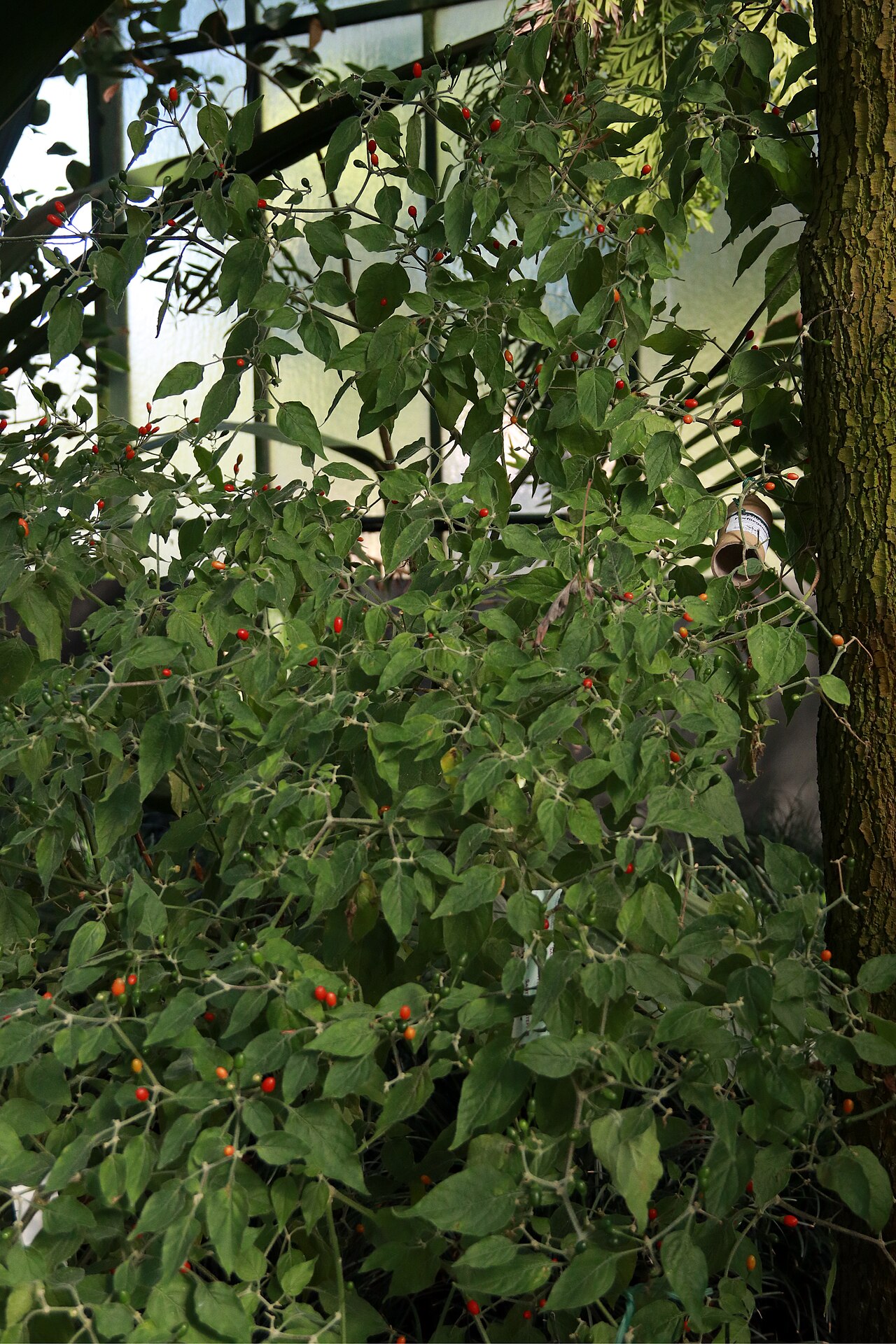
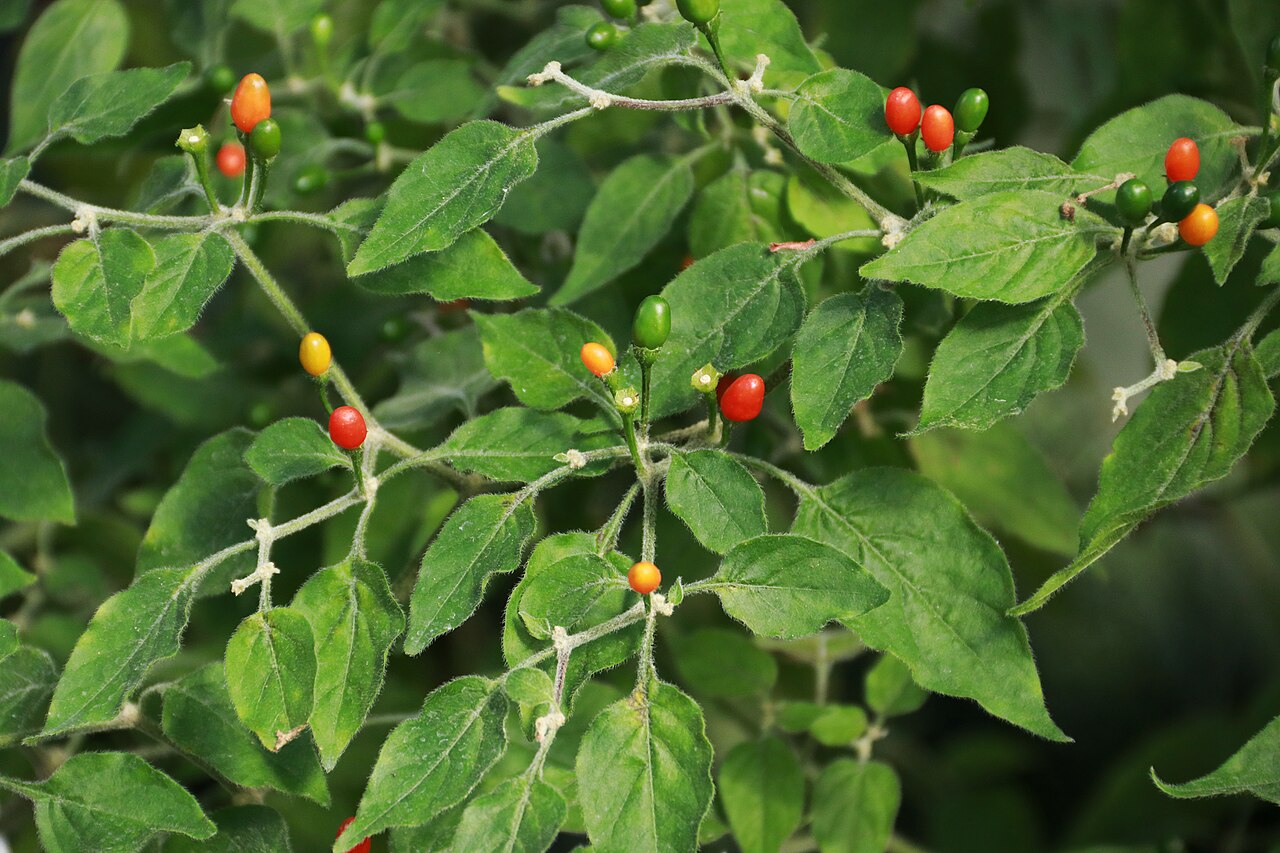
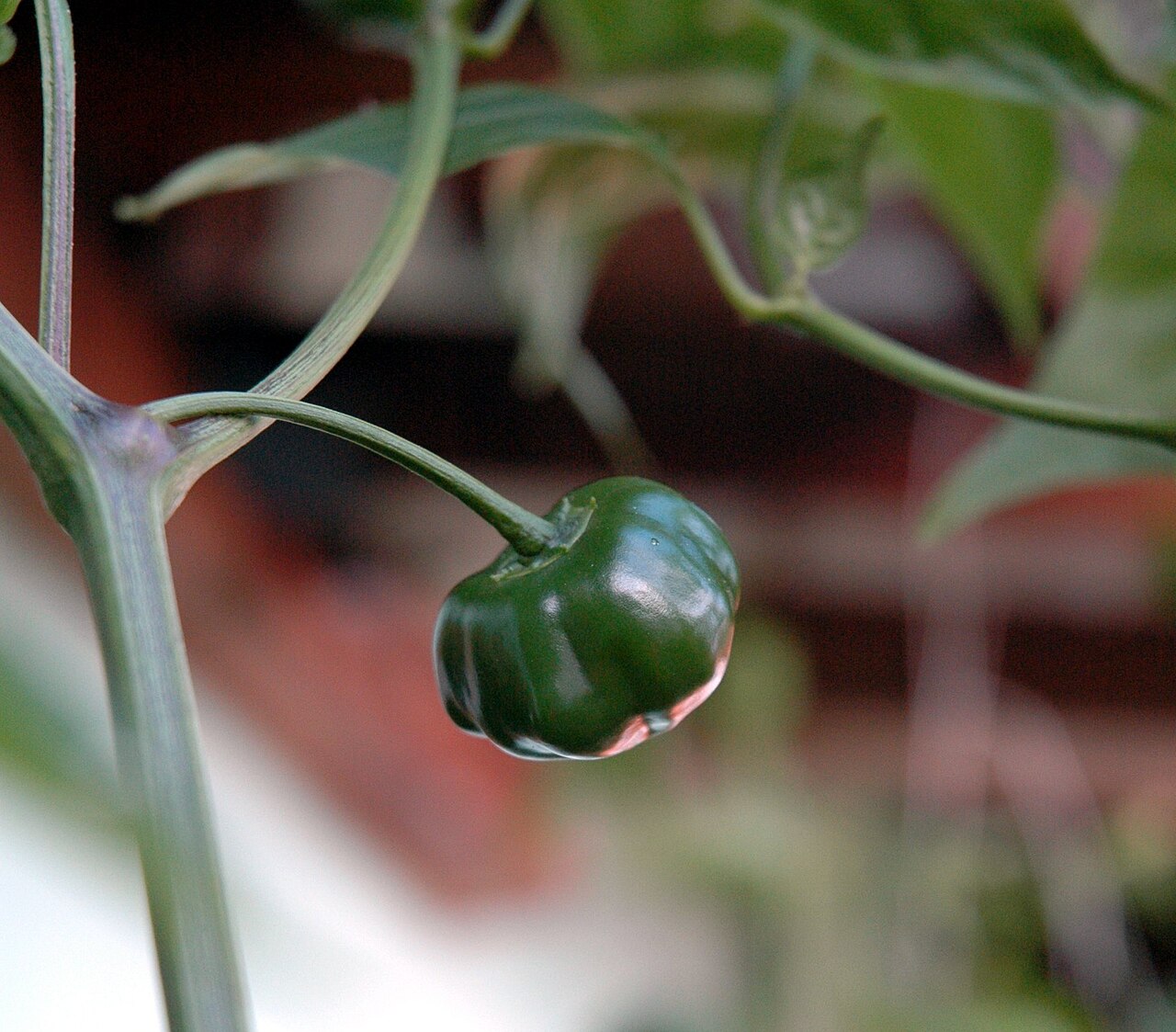
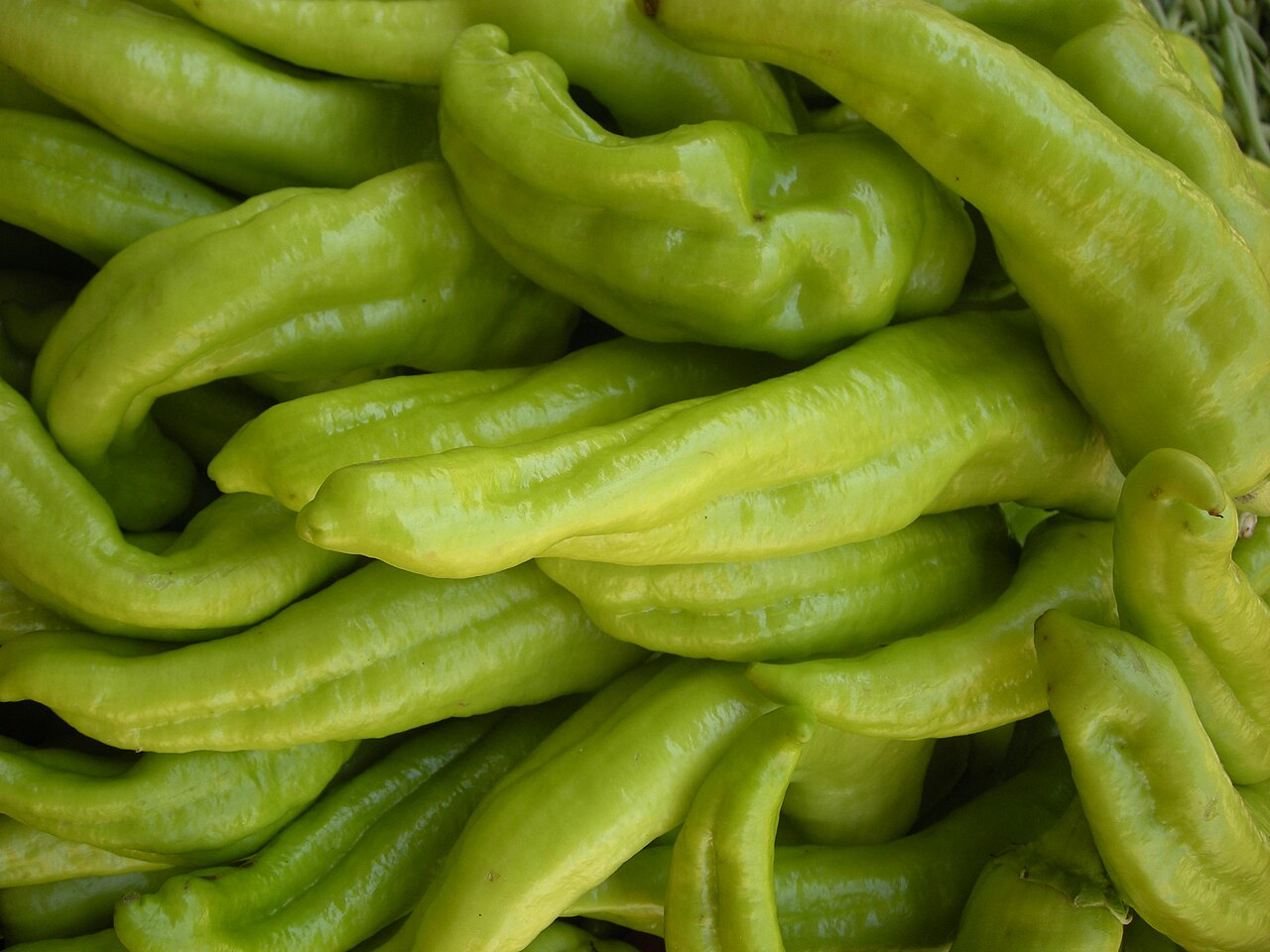
Capsicum baccatum, commonly called ají, is a perennial shrub and one of the five domesticated chili pepper species. Its heat level varies widely by cultivar, from nearly heatless types like the Peppadew to hot varieties such as ají amarillo, which measures 30,000 to 50,000 Scoville heat units. The plant produces white or cream flowers with a green or gold corolla, and pollination occurs by insects or self-pollination. Unlike other Capsicum species, its fruit pods come in many shapes and sizes and typically hang downward, offering a citrusy or fruity taste.
This species is the primary domesticated pepper in Bolivia, Colombia, Ecuador, Peru, and Chile. The Moche culture depicted ají amarillo peppers in their art. South American farmers also grow C. baccatum as ornamental plants for export. Cultivars include ají amarillo (also called amarillo chili or ají escabeche), Bishop's crown, lemon drop (ají limón or ají limo), and piquanté pepper.
C. baccatum, especially ají amarillo, originated in ancient Peru and the Andean region. It is central to Peruvian cuisine, forming a condiment trinity with red onion and coriander. Though called "yellow chili," the pods are bright orange and turn yellow only when cooked. Ají amarillo appears in Peruvian and Bolivian dishes—used fresh in Peru, dried and ground in Bolivia—such as ají de gallina, Papa a la Huancaína, and Bolivian fricasé Paceño. In Ecuador, it is served as a separate condiment with onion and lemon juice. Colombian, Peruvian, and Ecuadorian cuisines also feature ají sauce. McCormick & Company named ají amarillo "Flavor of the Year" for 2025, with a predicted 59% increase in menu appearances over four years. In Brazil, C. baccatum var. pendulum, known as dedo-de-moça (lady-finger), is used especially in the South and Southeast.
The word ají has been used since about 4600 BCE, originating in the Otomanguean protolanguage and spreading with the fruit from Central and South America. The name Capsicum comes from Greek kapos, and baccatum means "berry-like."
- species
- Capsicum baccatum
- common_name
- ají
- flower_color
- white or cream
- corolla_color
- green or gold
- pollination
- insect or self-pollinated
- scoville_range
- 30,000 to 50,000 SHU (ají amarillo)
- domesticated_in
- Bolivia, Colombia, Ecuador, Peru, Chile
Lore & Background
Capsicum baccatum has been cultivated for millennia, with the word 'ají' used since approximately 4600 BCE in the protolanguage Otomanguean. The Moche culture represented ají amarillo peppers in their art. The species includes cultivars such as ají amarillo, Bishop's crown, lemon drop, and piquanté pepper.
Reader's Guide
Capsicum baccatum is significant as a foundational ingredient in Andean cuisines, especially Peruvian and Bolivian, where ají amarillo is part of a condiment trinity with red onion and coriander. Its pungency varies widely, from nearly heatless Peppadew to hot varieties like ají amarillo (30,000–50,000 SHU). The species is also grown as an ornamental plant for export. In 2025, McCormick & Company named ají amarillo 'Flavor of the Year,' projecting a 59% increase in menu appearances over four years. Unlike other Capsicum species, its pods hang down and have diverse shapes and sizes. The binomial name Capsicum baccatum means 'berry-like,' reflecting its fruit form.
Did You Know?
- The word 'ají' has been used since approximately 4600 BCE, originating in the protolanguage Otomanguean.
- Ají amarillo peppers are bright orange when mature, but turn yellow only when cooked.
- Capsicum baccatum flowers are either insect or self-pollinated.
- The Moche culture depicted ají amarillo peppers in their art.
Botanical Character and Cultivation
Capsicum baccatum is a perennial shrub belonging to the genus Capsicum and stands as one of only five chili pepper species that humans have domesticated. Its blossoms present in white or cream tones, with a corolla that ranges from green to gold, and they rely on either insect visitation or self-pollination to set fruit. What distinguishes this species botanically is the extraordinary diversity of its fruit pods. Unlike other capsicum species, which tend to settle into a single recognizable shape, baccatum cultivars have been bred into a remarkable array of forms and sizes. The pods characteristically hang downward from the plant, setting them apart from the upright habit of Capsicum frutescens. Flavor profiles beyond mere heat also come into play, as many baccatum varieties carry a citrus or fruity note. Pungency spans a broad spectrum across cultivars: the Peppadew registers as nearly heatless, while the widely cultivated ají amarillo lands between 30,000 and 50,000 Scoville heat units.
Culinary Role Across the Andes and Beyond
The domesticated form of Capsicum baccatum, known as C. baccatum var. pendulum, serves as the preferred chili pepper across Bolivia, Colombia, Ecuador, Peru, and Chile. Its culinary roots trace back to ancient Peru and the broader Andean region, and the Moche culture even depicted ají amarillo peppers in their artistic works. In Peruvian cooking, ají amarillo forms part of a celebrated condiment trinity alongside red onion and coriander. Interestingly, despite its name meaning "yellow chili," the mature pods are actually bright orange; the yellow hue emerges only after cooking. Usage patterns differ by country: Peruvians favor the pepper fresh, while Bolivians typically dry and grind it. Iconic dishes include the Peruvian stew ají de gallina, the creamy sauce dish Papa a la Huancaína, and the Bolivian fricasé Paceño. In Ecuador, ají amarillo is paired with onion and lemon juice in a small bowl served alongside meals as an optional condiment. Across Colombia, Peru, and Ecuador, ají sauce remains a staple accompaniment. In Brazil, a related cultivar called dedo-de-moça, or "lady-finger," features prominently in the cuisines of the South and Southeast regions.
Linguistic Heritage and the Name Ají
The word ají carries a linguistic lineage stretching back to approximately 4600 BCE, making it one of the oldest pepper-related terms in human language. It first appeared in the protolanguage Otomanguean and traveled alongside the Capsicum fruit itself from Central and South America into other pepper-growing regions around the world. Today, Capsicum baccatum retains the name ají in common usage, while many other pepper species acquired the English term "pepper" through a different route: Spanish conquistadors observed the similarity between the heat sensation of these New World fruits and that of black pepper, and the comparison stuck. The scientific binomial tells its own story. Capsicum derives from the Greek word kapos, while baccatum translates to "berry-like," a nod to the small, rounded fruits of the original wild plants. The species encompasses several well-known cultivars, including ají amarillo (also called amarillo chili or ají escabeche), Bishop's crown, lemon drop (or ají limón), and the piquanté pepper, each carrying its own regional identity and culinary role.
Modern Recognition and Economic Reach
In 2025, McCormick & Company, a prominent global spice firm, named the Ají Amarillo pepper its "Flavor of the Year," a designation that signals the cultivar's growing prominence on international restaurant menus. The company projects a 59 percent increase in menu appearances for this pepper over the following four years, underscoring a broader shift in global culinary interest toward Andean ingredients. Beyond the kitchen, Capsicum baccatum has found a second life in the ornamental plant trade. South American farmers cultivate the species specifically for export as decorative plants, capitalizing on the visual appeal of its hanging pods and varied fruit shapes. The species' cultivar range also offers commercial versatility: the nearly heatless Peppadew appeals to consumers seeking flavor without burn, while the ají amarillo delivers a substantial 30,000 to 50,000 Scoville heat units for those who crave intensity. This breadth of heat and form, combined with the pepper's deep cultural roots in five South American nations, positions Capsicum baccatum as both a heritage crop and a rising star in the modern spice economy.
Gallery
Frequently Asked Questions
What is Capsicum baccatum in Bolivian cooking?
Capsicum baccatum, universally known in Bolivia as ají, is a perennial chili shrub and one of only five domesticated species in the Capsicum genus. It functions as a cornerstone seasoning across a huge range of traditional Bolivian dishes.
How hot is ají amarillo compared to other peppers?
The ají amarillo cultivar lands between 30,000 and 50,000 Scoville heat units, solidly in the medium-hot band. Other cultivars of the same species, like the Peppadew, can be almost completely heatless, so the range within one species is surprisingly wide.
What does ají actually taste like?
The fruit carries a bright citrusy or fruity flavor that distinguishes it from many other chilies. That tangy, almost zesty note is what makes it such a go-to seasoning in Bolivian kitchens.
What do Capsicum baccatum flowers and fruit look like?
The shrub produces white or cream blossoms with a green or gold corolla, and pollination is handled by insects or by the plant itself. The fruit pods hang downward and come in a wide variety of shapes and sizes rather than one uniform form.
Why is ají so central to Bolivian food culture?
As one of just five domesticated chili species on the planet, ají underpins countless regional recipes and everyday meals in Bolivia. Its fruity heat and incredible versatility make it a defining flavor of the national cuisine.
More in Bolivian cuisine 1-19
Spotted an error? Know more?
This is a living reference — every entry is fact-audited, and reader corrections feed straight into our audit queue. Suggest an edit · See this site's audit record