Chuflay
A Bolivian mixed drink made with singani and ginger ale.

Wikipedia / Wikimedia Commons
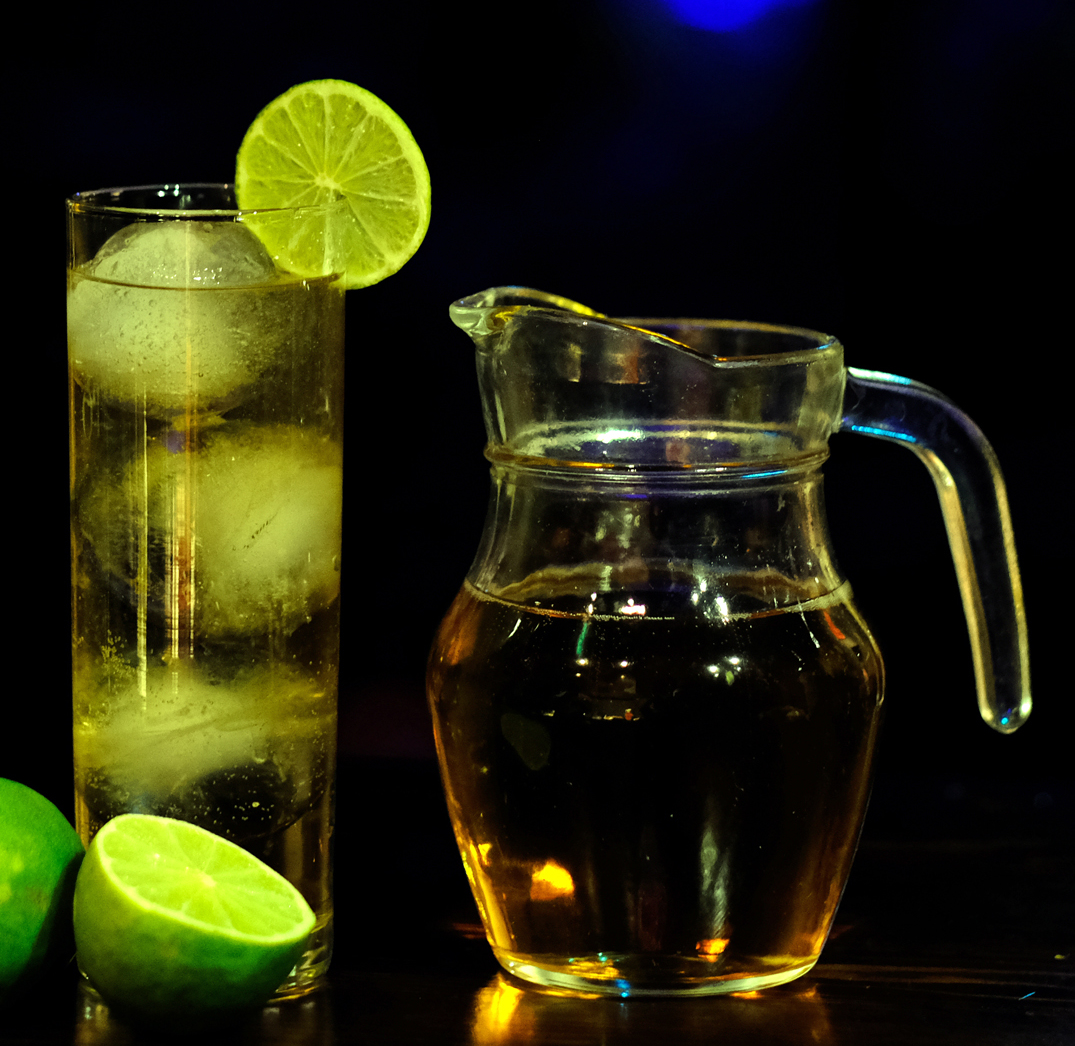
Chuflay is a traditional Bolivian mixed drink made with singani, a Bolivian grape brandy, served on the rocks in a tall glass with ginger ale, 7-Up, or Sprite and often garnished with a slice of lime. It is commonly associated with special events such as weddings and promotions and is frequently served due to its affordability. The drink's name derives from the English railway term 'Short Fly,' referring to a temporary rail built around obstacles, which was applied to the drink because it caused quick intoxication. Bolivians transformed 'Short Fly' into 'Chuflay,' and the name was later Spanishized as it became an emblematic Bolivian beverage.
- type
- Mixed drink
- origin
- Bolivia
- main_ingredient
- Singani
- common_mixers
- Ginger ale, 7-Up, or Sprite
- associated_game
- Cacho
- regions_consumed
- La Paz, Potosí, Oruro, Cochabamba, Chuquisaca, Santa Cruz, Tarija
Lore & Background
Chuflay originated as a combination of singani and ginger ale, created as a temporary replacement during a gin shortage. The drink was called 'Short Fly' by English engineers, a railway term for a temporary rail built around obstacles, because it caused them to become drunk quickly. When Bolivians heard 'Short Fly,' they transformed it into 'Chuflay,' and the name was later Spanishized by local populations.
Reader's Guide
Chuflay holds significance as an emblematic Bolivian beverage, deeply tied to the country's cultural identity. It is commonly consumed in several departments, including La Paz, Potosí, Oruro, Cochabamba, Chuquisaca, Santa Cruz, and Tarija, and is frequently served at special events such as weddings and promotions. The drink is also associated with the dice game cacho, further embedding it in social traditions. Its affordability and simple preparation—made on the rocks in a tall glass with singani and a carbonated mixer—have made it a staple across Bolivia. The name's origin from railway slang highlights the historical influence of English engineers and the adaptation of foreign terms into local language. Chuflay's legacy endures as a symbol of Bolivian mixology and communal celebration.
Did You Know?
- Chuflay is made with singani, a Bolivian grape brandy, and is typically served in a Collins glass.
- The name 'Chuflay' comes from the English railway term 'Short Fly,' referring to a temporary rail built around obstacles.
- The drink was created as a temporary replacement during a gin shortage.
- Chuflay is commonly associated with the dice game called cacho.
Origins & Etymology
Chuflay's name carries a fascinating industrial backstory rooted in the world of English railway engineering. During a period when gin was in short supply, English engineers working in Bolivia turned to singani as a stopgap substitute. They paired it with ginger ale and christened the concoction "Short Fly," a term borrowed directly from railway jargon. In that technical vocabulary, a short fly refers to a temporary rail laid to bypass a flooded stretch, a breakdown, or some other obstacle on the line. The engineers applied the label with a wink: the drink got them drunk just as quickly as a shortcut bypasses a detour. When local Bolivians encountered the phrase, they naturally reshaped it into something that fit their own phonetic landscape, landing on "chuflay." Over time, the Spanish-speaking communities who came into regular contact with the beverage fully adopted the name, and what had begun as a practical workaround for a supply problem slowly hardened into one of Bolivia's most recognizable mixed drinks.
Composition & Preparation
Preparing a chuflay is refreshingly straightforward, which is part of what makes it so approachable at gatherings of any scale. The base spirit is a single jigger of singani, Bolivia's own distilled spirit, poured over ice into a tall, slender vessel—typically a Collins glass that gives the drink its characteristic elongated silhouette. The glass is then topped up with a carbonated mixer; the most common choices are ginger ale, 7-Up, or Sprite, each lending a slightly different sweetness and spice profile to the final pour. A slice of lime is often pressed into the rim or dropped into the glass as a garnish, adding a bright citrus note that cuts through the sweetness of the soda. The result is a light, fizzy, easy-drinking cocktail that requires no elaborate technique, no muddling, and no special bar equipment. Its simplicity is precisely what allows it to be mixed quickly and served in large quantities at the kinds of social events where it thrives.
Cultural Role & Social Context
Chuflay occupies a distinctive niche in Bolivian social life, functioning less as a barroom indulgence and more as a communal ritual drink. It is the go-to beverage at milestone celebrations—weddings, professional promotions, and other special occasions where a crowd needs something refreshing, affordable, and easy to share. Its low cost in most venues means hosts can pour generously without straining a budget, and it is served frequently enough that most Bolivians have a clear memory of toasting with one. Beyond formal events, chuflay has a strong association with cacho, the traditional dice game that is a staple of Bolivian leisure. The pairing makes sense: the drink's light, fizzy character complements the casual, competitive atmosphere of a dice table. Together, the beverage and the game form a recognizable social package that spans generations and regions, anchoring chuflay firmly in the everyday fabric of Bolivian culture rather than relegating it to tourist menus or export markets.
Geographic Reach & National Identity
Although it was born from a very specific historical circumstance—a gin shortage and a group of English railway workers—chuflay has since spread across virtually the entire country of Bolivia. It is consumed regularly in the departments of La Paz, Potosí, Oruro, Cochabamba, Chuquisaca, Santa Cruz, and Tarija, making it one of the few mixed drinks with truly nationwide recognition. This broad geographic footprint is a testament to how quickly a practical, affordable recipe can take root when it meets a culture that values communal drinking. Over the decades, the drink shed its foreign, industrial origins and was fully embraced by local populations as their own. It now sits alongside other national beverages as an emblematic symbol of Bolivian identity, listed in reference works dedicated to the country's drink culture. What began as a stopgap for thirsty engineers on a rail line has become, in the words of the people who drink it, simply a chuflay—uncomplicated, universal, and unmistakably Bolivian.
Gallery
Frequently Asked Questions
What exactly is Chuflay?
Chuflay is a traditional Bolivian mixed drink that combines singani—a locally produced grape brandy—with a carbonated mixer such as ginger ale, 7-Up, or Sprite. It is typically served over ice in a tall glass and finished with a lime slice as garnish.
Where does the name 'Chuflay' come from?
The name traces back to the English railway term 'Short Fly,' which described a temporary track laid around an obstacle. The term was borrowed for the drink because it produced a rapid buzz, and Bolivians phonetically reshaped it into 'Chuflay.'
On what occasions do Bolivians usually drink Chuflay?
It is a staple at weddings, job promotions, and other celebratory gatherings. Its low cost makes it a go-to choice for larger parties where many guests need to be served.
Which parts of Bolivia is Chuflay most popular in?
You will find it widely consumed across La Paz, Potosí, Oruro, Cochabamba, Chuquisaca, Santa Cruz, and Tarija. In short, it is a nationwide favorite rather than a regional specialty.
Is Chuflay linked to any particular game or tradition?
Yes—Chuflay is commonly paired with Cacho, a popular Bolivian drinking game. The drink's quick-onset effect makes it a natural fit for the fast-paced, competitive nature of the game.
More in Bolivian cuisine 1-19
Spotted an error? Know more?
This is a living reference — every entry is fact-audited, and reader corrections feed straight into our audit queue. Suggest an edit · See this site's audit record