Singani
Bolivia's national distilled spirit, produced at altitude since the 1500s.

Wikipedia / Wikimedia Commons
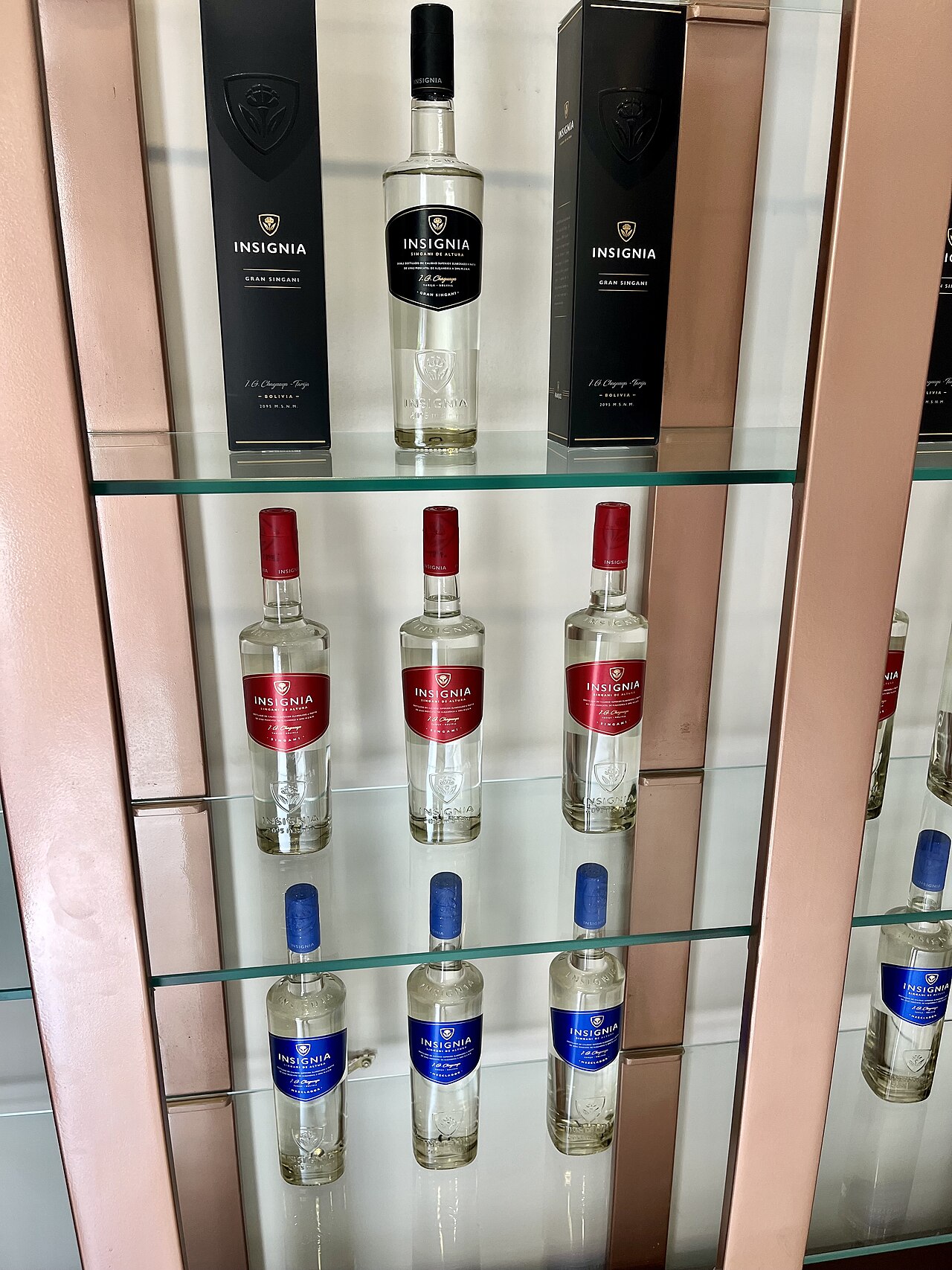
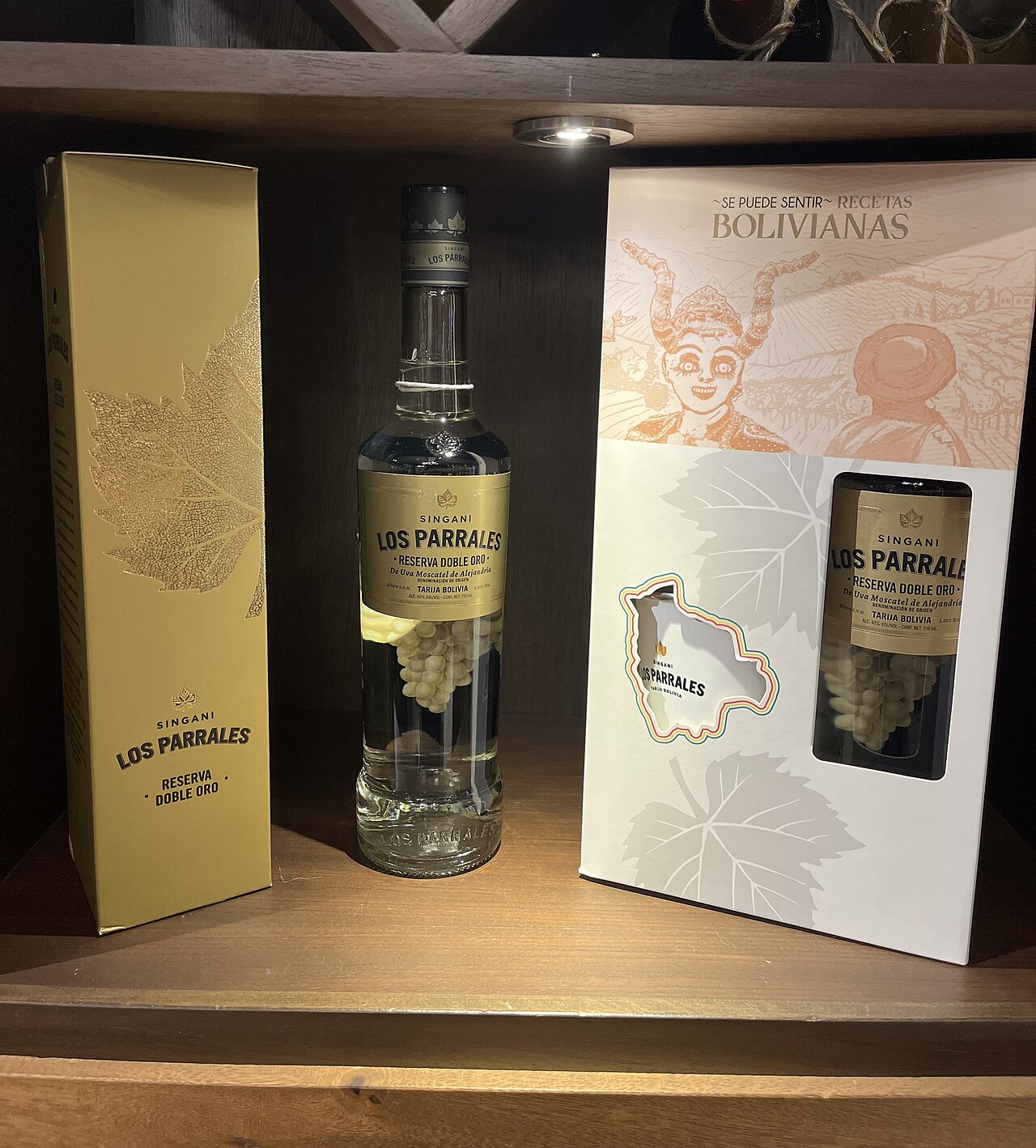
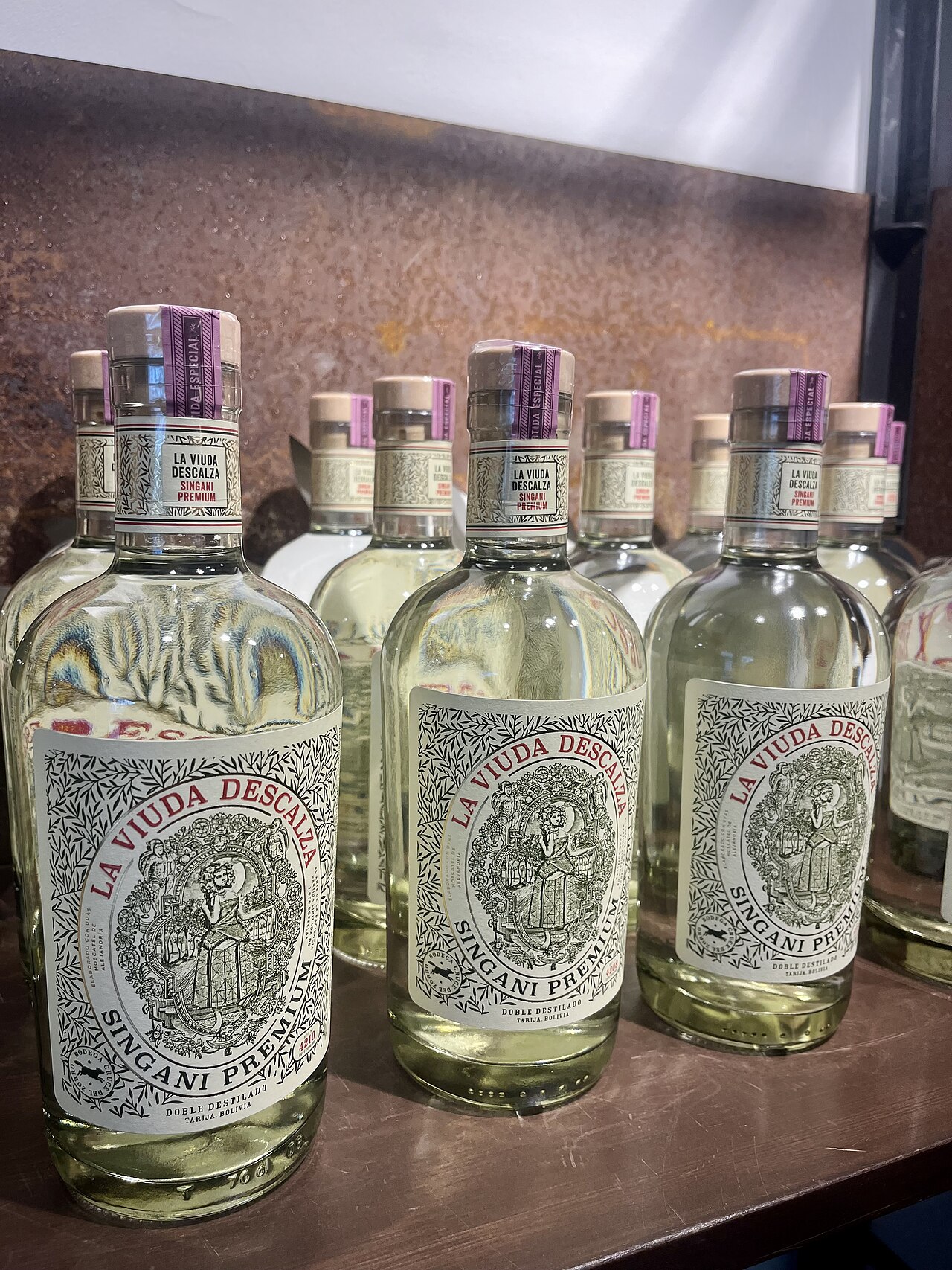
Singani is a Bolivian eau-de-vie or brandy distilled from white Muscat of Alexandria grapes, produced exclusively in the high valleys of Bolivia. It is the country's national distilled spirit and considered part of its cultural patrimony, with production dating to the 16th century shortly after the Spanish arrived in South America.
- type
- Distilled spirit
- origin
- Bolivia
- main_ingredient
- White Muscat of Alexandria grapes
- established
- 16th century
- legal_protection
- Denominación de Origen and Geographical Indication (Bolivia)
- minimum_vineyard_elevation
- 1,600 m (5,250 feet)
- known_for
- Altitude product, national spirit of Bolivia
Lore & Background
Singani has been produced since the 16th century, first distilled by monastic orders who needed sacramental wine and found it expedient to also distill. Most sources say the name derives from a pre-Columbian village of that name near the mission that first distilled the liquor. Linguistic evidence suggests the word arises from the Aymara word 'siwingani', meaning 'the place where sedges grow', reduced through syncope to 'singani'.
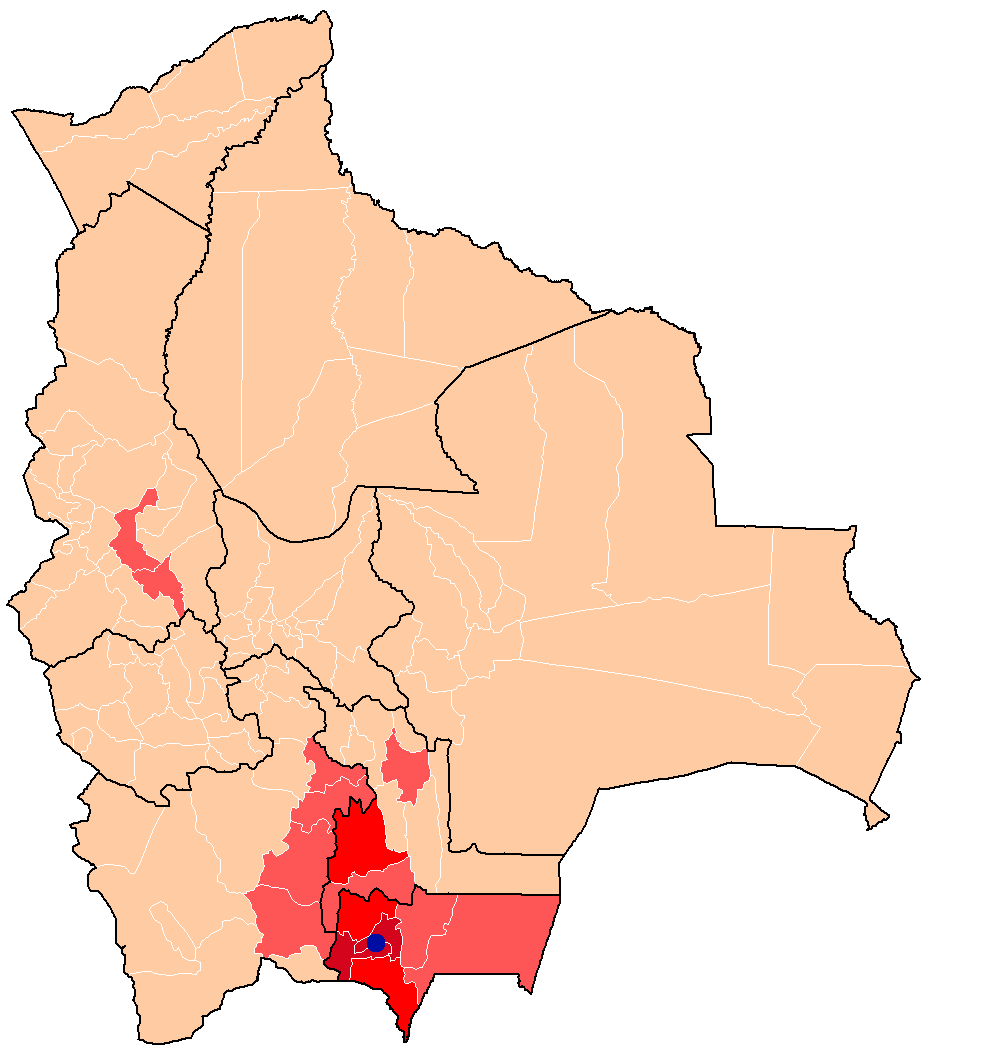
Grapevines were introduced into Bolivia by Spanish missionaries as early as 1530, and wine production began between the 1530s and 1550s. The massive silver strike at Potosí in 1545 created an unprecedented market, and three likely areas where the use of the word singani got its start stretch in an arc from Potosí to the Spanish royal road. By the 20th century, the Tarija region became the dominant supplier, and today most of Bolivia's grape, wine, and singani industry is centered there.
Reader's Guide
Singani holds significance as Bolivia's exclusive national distilled spirit, with a history spanning over 400 years. Unlike neighboring pisco, singani has always been made only in Bolivian territory, and no domain controversy exists. Since the 1990s, formal Bolivian regulations have codified long-practiced methods, requiring vineyards to be planted at elevations of 1,600 m or higher, making singani legally an 'altitude product'. The spirit's production methods and drinking characteristics more closely resemble eaux-de-vie, but it is treated as a brandy for international trade. Bolivia's Supreme Decree 21948 (1988) declares singani an exclusive and native product, protecting the name from misuse. The industry's consolidation in Tarija brought modernization, though since 2000 there has been a resurgence of small producers in the original Cinti region, reinvigorating early brands.
Did You Know?
- Singani is distilled from white Muscat of Alexandria grapes, introduced to the Americas as early as 1520 via the Canary Islands.
- The name likely derives from the Aymara word 'siwingani', meaning 'the place where sedges grow'.
- Most production comes from vineyards at around 1,800 m (6,000 feet) above sea level.
- The massive silver strike at Potosí in 1545 created a large market that drove the early singani trade.
Indigenous Foundations and Colonial Layering
Bolivian cuisine is rooted in the culinary traditions of the Aymara and Inca peoples, along with contributions from other Andean and Amazonian groups. The foundational ingredients—corn, potatoes, quinoa, and beans—reflect millennia of highland agriculture and represent the bedrock of the national pantry. When Spanish conquistadors arrived, they brought rice, wheat, beef, and pork, which gradually merged with these pre-existing staples. Later waves of German, Italian, French, and Arab-Asian immigrants added further layers of flavor and technique, though Spanish influence remains the single dominant foreign thread. Unlike many of its Latin American neighbors, Bolivia experienced relatively modest European immigration, which helped preserve the indigenous base. The result is a cuisine where pre-Columbian grains and tubers still anchor nearly every plate, while colonial and post-colonial additions provide texture, protein, and variety.
A Cuisine Shaped by Geography
Bolivia's dramatic terrain produces two distinct culinary worlds. In the western Altiplano, the high and cold climate drives cooks toward bold spices and hearty preparations designed to combat the chill. Down in the Amazonian lowlands, the kitchen draws on what the humid forests and rivers provide: an abundance of tropical fruits, vegetables, fish, and yuca. This geographic split means that a dish from La Paz and one from the eastern lowlands can feel like they belong to entirely different culinary traditions. The Andean highlands favor the ancient grains and tubers, while the eastern regions lean on river fish and fruit-forward preparations. Even within the Andes, local fruits like the achacha from the Amazon and the cherimoya, believed native to the highlands, find their way into regional dishes, bridging the two worlds.
The Rhythm of the Bolivian Day
In Bolivia, the day is organized around food. Breakfast is often a quiet affair—black coffee and a slice of marraqueta bread with butter and jam. The true centerpiece is almuerzo, the midday meal, so central to daily life that shops and offices close between twelve and two to let workers head home. A proper almuerzo unfolds in courses: soup, a meat-and-rice main with potatoes, then dessert and coffee, all taken slowly and traditionally followed by a siesta nap. Around four or five in the afternoon, the ritual shifts to té, an English-inspired tea break enjoyed at salones de té that double as bakeries, where black tea or coca-leaf infusions pair with galletas Maria or humintas. Dinner arrives late, after eight, and is deliberately lighter and more casual, often closing the day with a bowl of traditional soup.
Sweets, Fruits, and the Art of the Palate
Bolivian confectionery draws on honey, sugarcane, and manjar blanco as its core sweeteners, the latter serving as a regional alternative to dulce de leche in desserts like alfajores. Coconut is a star ingredient, appearing in cocadas, coconut pudding, and pastelitos. The fruit palette spans both Andean and Amazonian origins: cherimoya, believed native to the highlands, is pressed into ice cream and sweets, while the Amazonian achacha and the tamarillo find their way into compotes, marmalades, and assorted desserts. Mark Twain famously called the cherimoya "the most delicious fruit known to men." Breakfast fritters called bunuelos are paired with api, a sweetened drink of morocho corn, cinnamon, milk, and sugar, while helado de canela offers a cinnamon-kissed sorbet and tawa-tawas bring the caramelized sweetness of miel de caña to a fried treat.
Gallery

Frequently Asked Questions
What exactly is Singani?
Singani is a clear, grape-based brandy (eau-de-vie) distilled from white Muscat of Alexandria grapes. It is Bolivia's official national distilled spirit and is produced only in the country's high-altitude valleys.
Where can Singani legally be made?
By law, the vineyards used for Singani must sit at a minimum elevation of 1,600 metres (about 5,250 feet) in Bolivia's high valleys. The spirit holds a Denominación de Origen and a Geographical Indication, meaning it cannot be produced outside those designated regions.
How far back does Singani's history go?
Production traces to the 1500s, shortly after Spanish settlers arrived in South America and began cultivating European grape varieties at altitude. That makes it roughly five centuries old as a distilled tradition.
What grape variety goes into Singani?
The only permitted base fruit is the white Muscat of Alexandria grape, which thrives in the intense UV light and large day-night temperature swings found at Bolivian highland elevations. This single-variety requirement is part of what gives Singani its distinctive floral, aromatic profile.
Why is Singani considered culturally important to Bolivia?
It is formally recognised as part of the nation's cultural patrimony and serves as a symbol of indigenous and mestizo winemaking heritage in the Andes. For Bolivians, Singani is not merely a drink but a point of national pride tied to the high valleys where it has been crafted for generations.
More in Bolivian cuisine 1-19
Spotted an error? Know more?
This is a living reference — every entry is fact-audited, and reader corrections feed straight into our audit queue. Suggest an edit · See this site's audit record