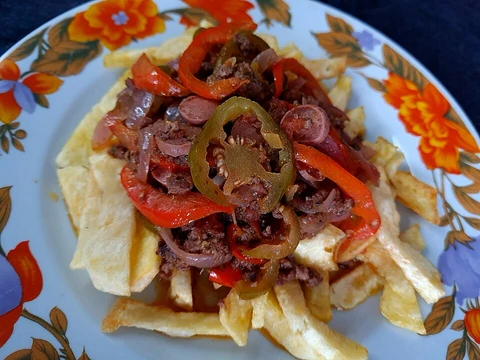
Pique macho
Bolivian dish of beef, fries, and spicy sauce.

Wikipedia / Wikimedia Commons
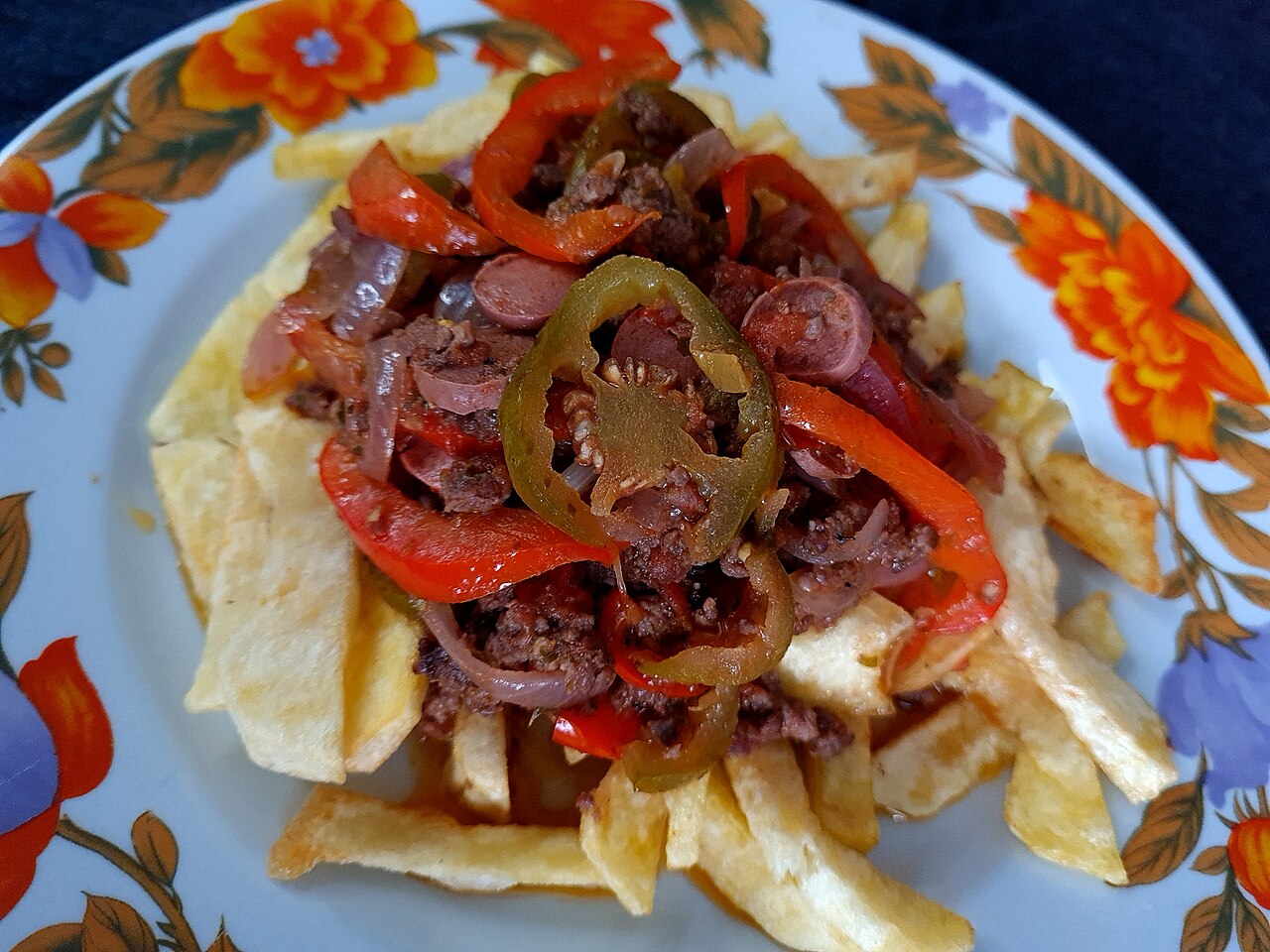
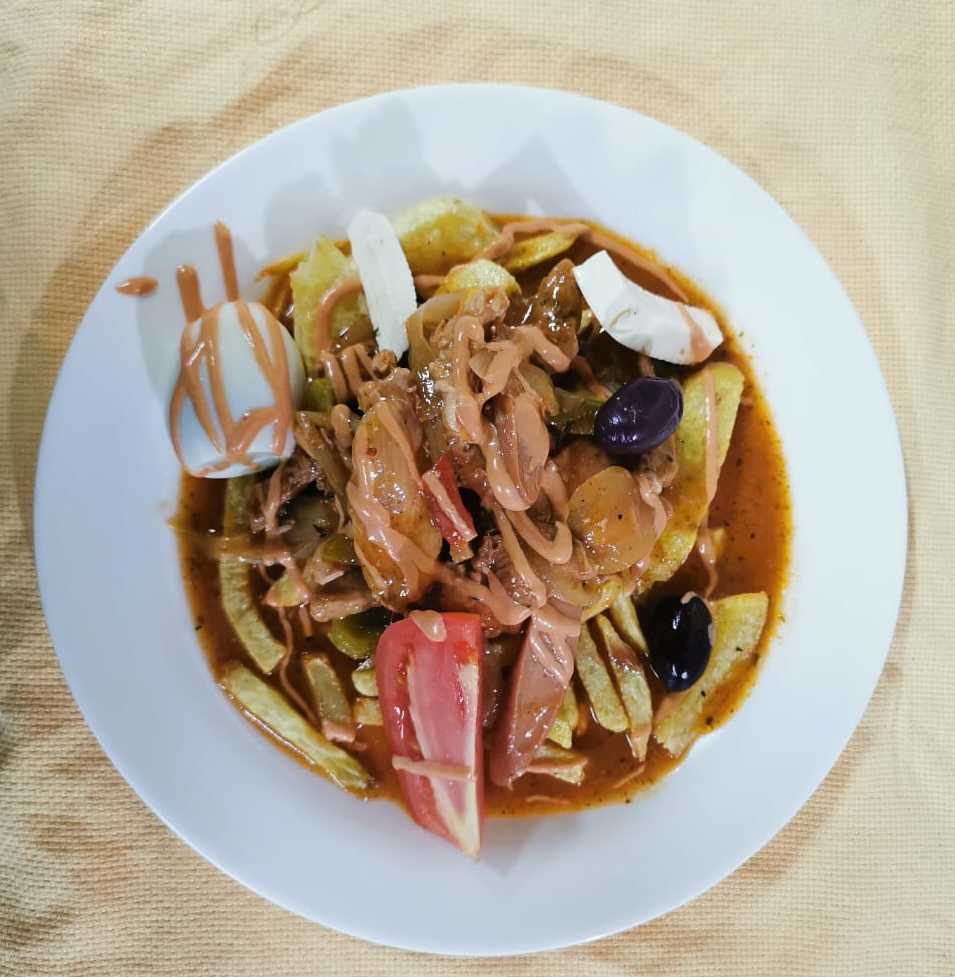
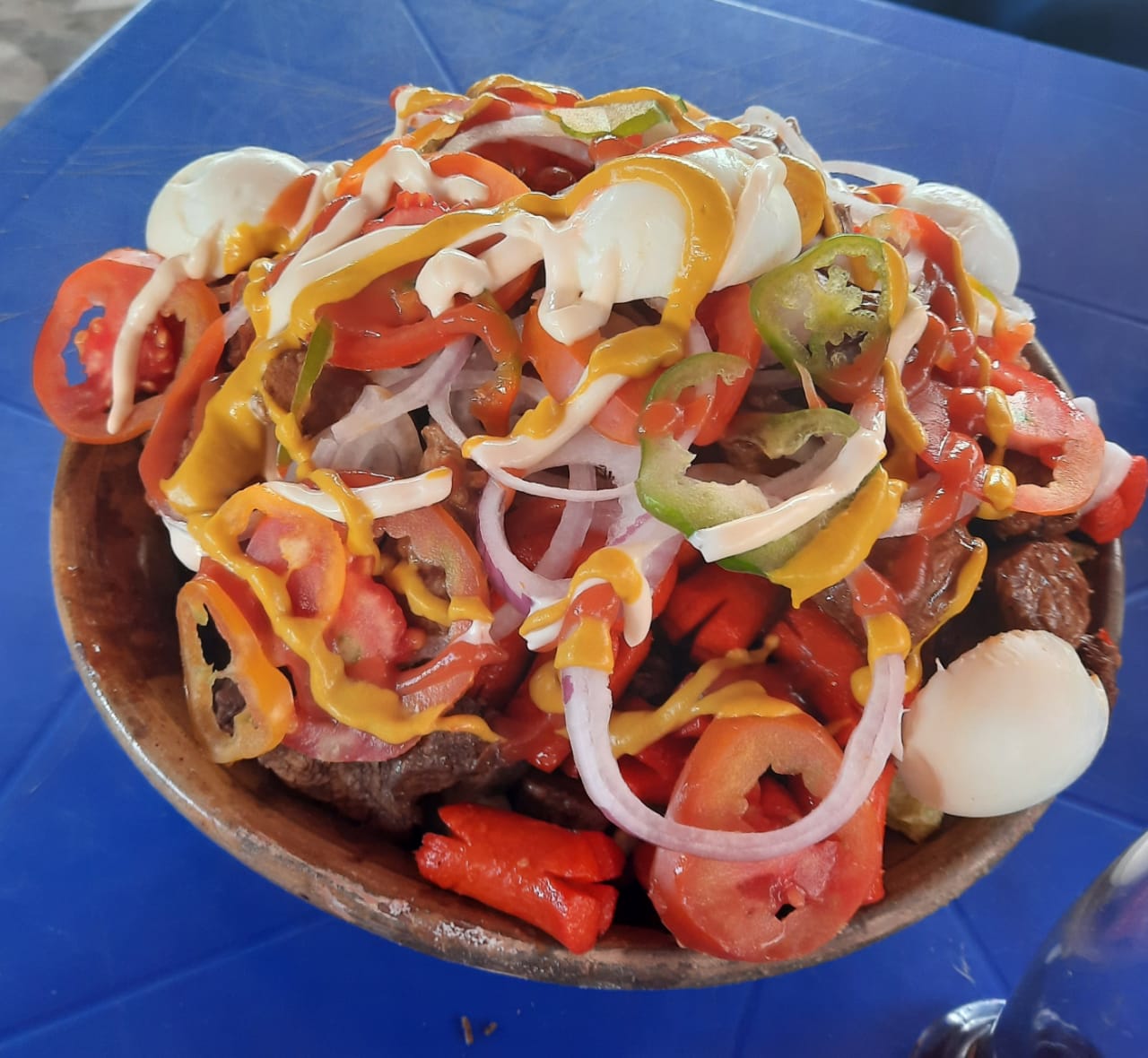
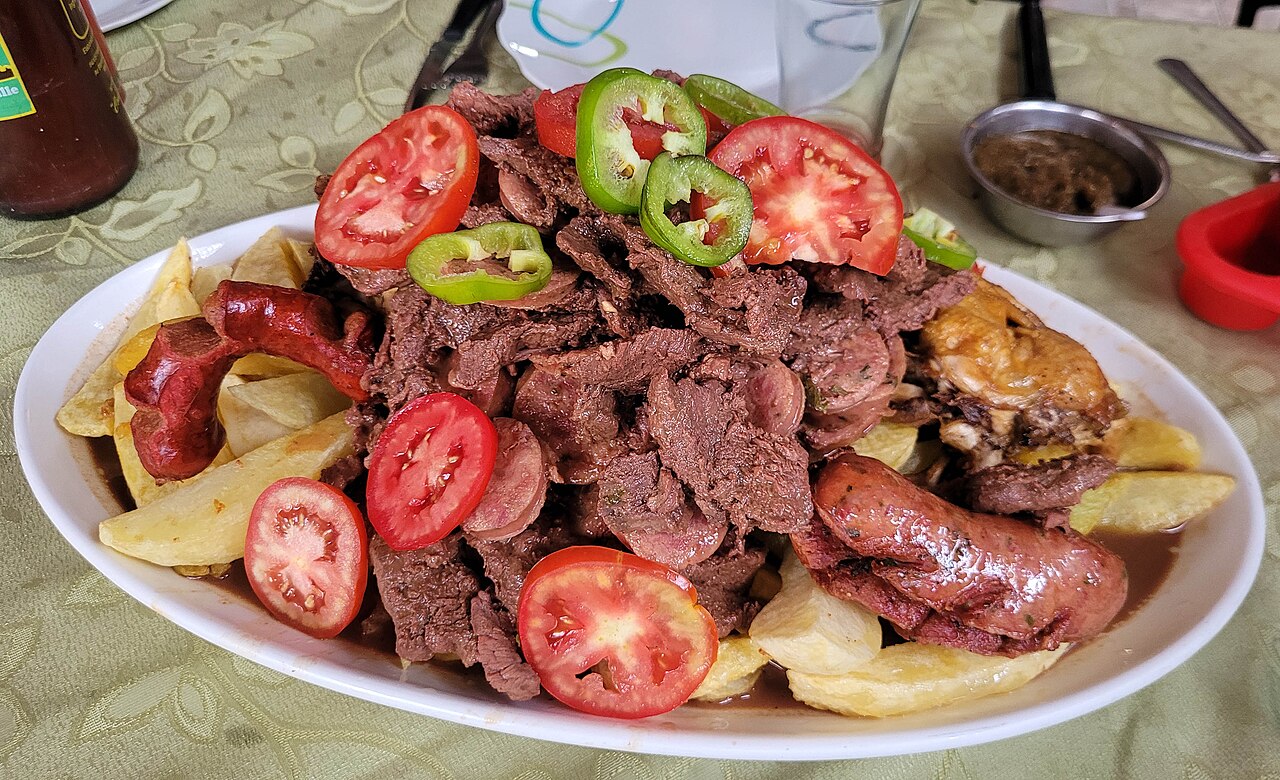
Pique macho, also called pique a lo macho, is a Bolivian dish from the Cochabamba Department region. It combines beef, sausage, red onion, green pepper, tomato, french fries, mustard, mayonnaise, and ketchup. One of the country's most popular meals, it has many regional versions across Bolivia, and boiled egg may be added depending on where it's made. Smaller servings are known simply as pique; pique macho is a very large portion, traditionally spicy due to pimentón (paprika). An urban legend says the name comes from being "macho" if you can finish one alone, though most people share it between two or more.
The dish originated in Cochabamba in the mid-1970s, when chefs Honorato Quiñones Andia and his wife Evangelina Rojas Vargas had the idea of combining savory meat with spicy sauce and serving it soaking wet over french fries. The couple, originally from Torotoro in Potosí Department's Charcas Province, started their restaurant in Cochabamba after marrying in 1969. One night, a group of drunk and hungry workers—pilots, technicians, and stewardesses from Lloyd Aéreo Boliviano—showed up at their restaurant, El Prado, near closing time. The owner said they had nothing left, but the workers insisted on eating whatever remained. She chopped up the leftover ingredients, served them very spicy to counter the drunkenness, and said, "Piquen si son machos" (Eat it if you think you're man enough). News spread, other guests began requesting the same dish, and many remarked, "This is a picado for machos," referring to its heat. The dish became highly popular, and the couple added it to the main menu, naming it "pique a lo macho." It spread from Cochabamba to La Paz and Santa Cruz, prompting the couple to move to a larger venue in 1978, called Quinta Miraflores Restaurant. In 2004, the Cochabamba Chamber of Restaurant and Related Fields Businessmen and the local tourism board awarded the couple the Alejo Calatayud Order and Social Tradition Merit, recognizing the dish as a cultural icon of the region. Evangelina Rojas Vargas died on 10 July 2006; her husband followed about seven months later in early 2007. Their restaurant still operates, serving the original recipe and preserving the dish's legacy.
Preparation combines beef, sausages, french fries or yuca frita, onions, green pepper, tomatoes, and locoto peppers. Key steps include marinating the meat with garlic, cumi
- origin
- Cochabamba Department, Bolivia
- creators
- Honorato Quiñones Andia and Evangelina Rojas Vargas
- year_created
- mid-1970s
- field
- Cuisine
- nationality
- Bolivian
- known_for
- Pique macho dish
Lore & Background
The dish has its origin in the region of Cochabamba in Bolivia when, in the mid-1970s, a couple of chefs, Honorato Quiñones Andia and his wife Evangelina Rojas Vargas, there had the bright idea of combining savoury meat with spicy sauce and serving it sopping wet atop french fries. The couple originated from the town of Torotoro in Charcas Province of the Potosí Department before starting their restaurant business in Cochabamba after their marriage in 1969. A story describes that one night when a group of workers from a nearby building, mainly pilots, technicians, and stewardesses of Lloyd Aéreo Boliviano, met at their restaurant, El Prado, the workers were drunk and hungry. The owner of the restaurant said they were already closing at the time and had nothing, but the group of workers insisted that they would eat anything remaining. The owner proceeded to chop what she had left of the ingredients that constitute the pique macho and served them really spicy to help with their drunkenness. She then said, 'Piquen' si son 'machos' (Eat it if you think you're man enough), and soon, when the news spread, other guests began to ask for the same dish, and many, when tasting it, agreed to say, 'This is a picado for machos', referring to how hot the dish was. The dish subsequently became high in demand, and both the couple began to include it in the restaurant's main menu and named it 'pique a lo macho'.
Reader's Guide
Since its creation in the mid-1970s, pique macho has spread from Cochabamba to major Bolivian cities of La Paz and Santa Cruz, prompting the couple to transfer the food venture to a larger one in 1978, named Quinta Miraflores Restaurant. In 2004, the Cochabamba Chamber of Restaurant and Related Fields Businessmen, together with the local tourism board, awarded the couple the Alejo Calatayud Order and Social Tradition Merit, recognising their dish as a cultural icon of the region of Cochabamba. The dish is an iconic Bolivian dish that combines beef, sausages, french fries or yuca frita, onions, green pepper, tomatoes, and locoto peppers, with key preparation involving meat marination with garlic, cumin, and soy sauce; potatoes frying; and mixture of ingredients in a pan before serving with a hard-boiled egg. Throughout Bolivia, local variations exist while maintaining the dish's original structure of beef, fries, and spicy elements. Highland Bolivians often use Ají sauce; in La Paz, it is served with Llajua sauce and fresh highland cheese. The dish has been adapted by Bolivian diaspora communities with meat substitutions like chicken and milder bell peppers, and vegetarian versions using mushrooms, seitan, or tofu have emerged in urban areas. In Los Angeles, the dish has become a favourite among some Hollywood celebrities, with actor Edward James Olmos once mentioning it when he portrayed the famous Bolivian math teacher Jaime Escalante in the 1988 film Stand and Deliver.
Did You Know?
- The dish was created in the mid-1970s by chefs Honorato Quiñones Andia and Evangelina Rojas Vargas in Cochabamba, Bolivia.
- The name 'pique macho' comes from a story where the owner told drunk workers 'Piquen si son machos' (Eat it if you think you're man enough).
- Evangelina Rojas Vargas died on 10 July 2006, and her husband Honorato Quiñones Andia died about seven months later in early 2007.
- In 2004, the couple received the Alejo Calatayud Order and Social Tradition Merit for the dish's cultural significance.
The Birth of a Legend in Cochabamba
In the mid-1970s, a married couple from the small town of Torotoro in Potosí's Charcas Province settled in Cochabamba after their 1969 wedding and opened a modest eatery called El Prado. Honorato Quiñones Andia and his wife Evangelina Rojas Vargas would never have predicted that a single late-night incident would birth one of Bolivia's most beloved dishes. One evening, a group of Lloyd Aéreo Boliviano employees—pilots, technicians, and stewardesses—stumbled in drunk and ravenous after the restaurant had already begun closing. With nothing properly prepared, the owner improvised: she chopped together whatever meat, vegetables, and potatoes remained, seasoned the hodgepodge with extra heat to cut through their inebriation, and tossed it over a mound of fries. As she set the plate down, she reportedly challenged them: 'Eat it if you think you're man enough.' Word traveled fast. Other diners demanded the same fiery creation, and one customer declared it a 'picado for machos.' The name stuck, and the dish entered the permanent menu as pique a lo macho.
Anatomy of the Dish
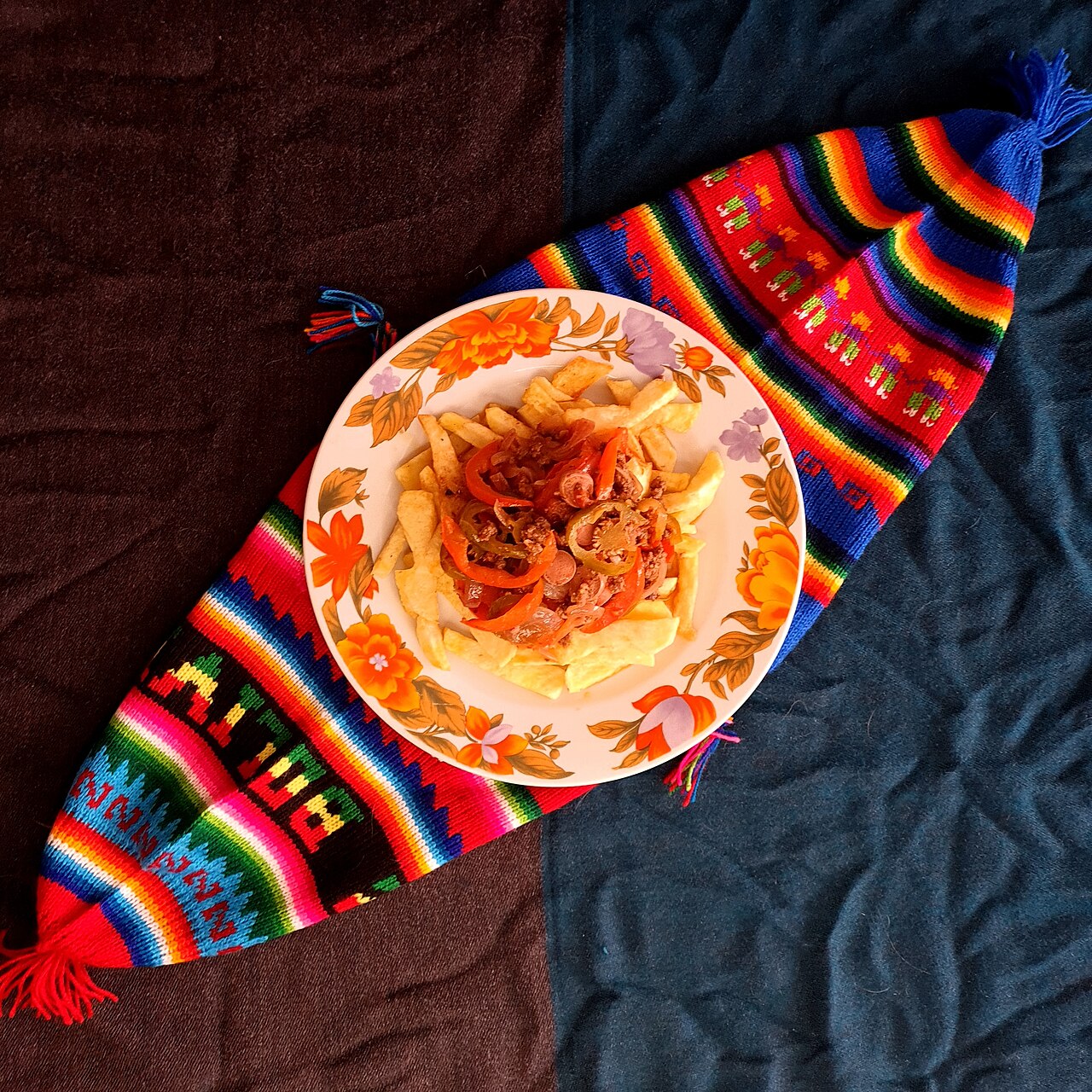
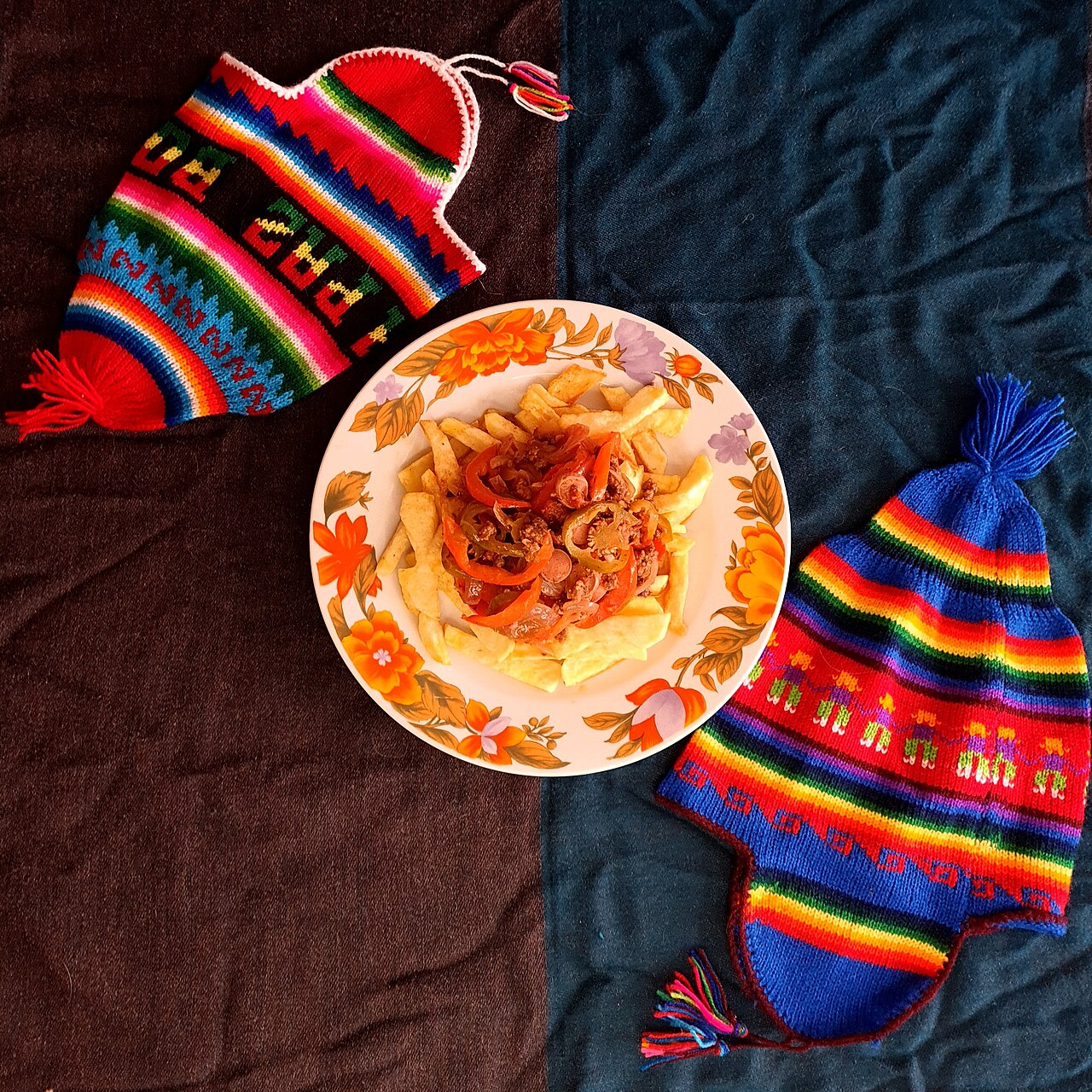
At its core, pique macho is a towering, saucy assembly of seasoned beef and sausage layered over thick-cut french fries, then showered with red onion, green pepper, tomato, mustard, mayonnaise, and ketchup. The spiciness that defines the 'macho' version comes from pimentón—paprika—giving it a heat that distinguishes it from the milder, smaller portion simply called pique. Preparation begins with marinating the meat in a blend of garlic, cumin, and soy sauce, building a deep savory base before anything hits the pan. The potatoes, a structural pillar of the dish, are peeled and sliced into chunky fries or wedges, then fried in hot vegetable or avocado oil for roughly ten to fifteen minutes until they turn golden and crisp, after which they are blotted on paper towels. All components are then combined in a pan to marry their flavors before being served drenched in sauce atop the fries. In some regions, a hard-boiled egg is added as a finishing touch, and the whole plate is traditionally meant to be shared among friends rather than devoured solo.
A Dish That Travels and Adapts
Once pique macho left Cochabamba, it absorbed the flavors of every Bolivian city it reached. In the highlands, cooks incorporate Ají sauce into the preparation, while in La Paz the plate often arrives topped with Llajua sauce and a wedge of el queso del altiplano, a fresh highland cheese, alongside traditional chorizo. Beyond Bolivia's borders, diaspora communities have made practical substitutions—swapping the native locoto peppers for milder bell peppers or replacing beef with chicken to suit local ingredient availability. Urban Bolivia has also seen vegetarian reinterpretations, with mushrooms, Asian seitan, or tofu standing in for the meats while preserving the dish's signature layered architecture of fries, vegetables, and sauces. The dish even crossed the Pacific: in Los Angeles, the spicy profile of pique macho has found a natural home within the city's Hispanic food culture, and it reportedly became a favorite among certain Hollywood figures. Actor Edward James Olmos, who portrayed Bolivian math teacher Jaime Escalante in the 1988 film Stand and Deliver, once referenced the dish, linking it to a broader cultural conversation about Bolivian identity abroad.
Recognition, Loss, and Enduring Legacy
The couple behind pique macho watched their improvised late-night creation grow into a national institution. By 1978, demand had outgrown El Prado, and Honorato and Evangelina relocated their operation to a larger venue they named Quinta Miraflores Restaurant. In 2004, the Cochabamba Chamber of Restaurant and Related Fields Businessmen, in partnership with the local tourism board, presented them with the Alejo Calatayud Order and Social Tradition Merit, formally recognizing pique macho as a cultural icon of the Cochabamba region. Tragically, the couple's time together was cut short: Evangelina passed away on July 10, 2006, and Honorato followed roughly seven months later in early 2007. Yet their culinary legacy has proven remarkably resilient. Their restaurant continues to operate to this day, still preparing the original recipe and keeping the dish alive for new generations. The urban legend persists that finishing a full pique macho solo marks you as truly 'macho,' though in practice most diners wisely split the enormous, fiery plate with a partner or a group, turning a single serving into a communal ritual.
Gallery
Frequently Asked Questions
What is Pique macho?
Pique macho is a hearty Bolivian plate originating from the Cochabamba Department that layers seasoned beef, sausage, and french fries under a mix of mustard, mayonnaise, ketchup, and chopped vegetables. It's widely regarded as one of Bolivia's most beloved comfort meals.
Who created Pique macho and when?
The dish is credited to Honorato Quiñones Andia and Evangelina Rojas Vargas, who developed it in the mid-1970s in Cochabamba. Since then it has spread across the country, with each region tweaking the recipe to local taste.
What's the difference between pique and pique macho?
A standard 'pique' is a modest, single-serving portion, while 'pique macho' refers to an oversized, shareable plate that traditionally includes a kick of pimentón (paprika) for heat. Think of it as the same concept scaled up with extra spice and protein.
What ingredients are in a traditional Pique macho?
The classic build features beef, sausage, red onion, green pepper, tomato, and a generous pile of french fries, all dressed with mustard, mayonnaise, and ketchup. Some regional versions top it off with a boiled egg, though that's not universal.
Why is it called 'macho'?
A popular urban legend holds that the name is a dare: if you can devour the entire plate solo, you're 'macho.' In practice, most diners split a pique macho with a friend or family, so the title is more about the dish's imposing size than an actual challenge.
More in Bolivian cuisine 1-19
Spotted an error? Know more?
This is a living reference — every entry is fact-audited, and reader corrections feed straight into our audit queue. Suggest an edit · See this site's audit record